Here is a survey about YOUR future when you get older: How do you see the second half of life?
Please go to https://de.surveymonkey.com/r/8NZQ3XV
OUR FIRST COMMUNITY LIVE CONVERSATION – about AGEING
Hear our presentation at the INTEGRAL EUROPEAN CONFERENCE in Hungary,
May 6th, 2016
We were pleased and grateful to witness a lively interest in the topic.
You are invited to join the discussion by filling in the survey above and by joining our Facebook Group http://bit.ly/integralageing
Hear our pre-conference talk about what we will be talking about on May 6th, 2016 in Siofok/Hungary.
What Becomes Possible when Getting Older?
What does CONSCIOUS AGEING mean? This question was underlying our broadcast series where we had conversations with more than 20 people, either in one-to-one conversation or in small groups.
The term Aging (or AGEING as we usually spell it) seems to suggest “old age” or “getting old” but, when you look closely, then you find that it doesn’t mean either one necessarily. “Ageing” means just “getting older”, and this process begins right after birth. Nonetheless, the habitual use of the word is so strong that, even we talked mainly about the later years in our human life, and mostly with people over 50 – with a few exceptions, of course.
A Review of the Conscious Ageing Series
Looking backward it seems to me very clear that the older our contributors were, the more they were interested in the topic. The youngest participant in her 30ies could relate best to the concept of AGEISM which affects practically everybody who is not the “right” age for the thing they are attempting to do. This can be the 14-year-old software developer who cannot open a bank account on his own, the singer who at age 40 tries to enter the profession or the 60-year-old woman who dresses like a teenager. All forms of rejection or belittling are an expression of ageism and, as mentioned, does not necessarily only refer to older people who, in their own right, have to face an enormous bunch of prejudice and denigration in our youth-oriented culture.
Getting Older – Getting Happier
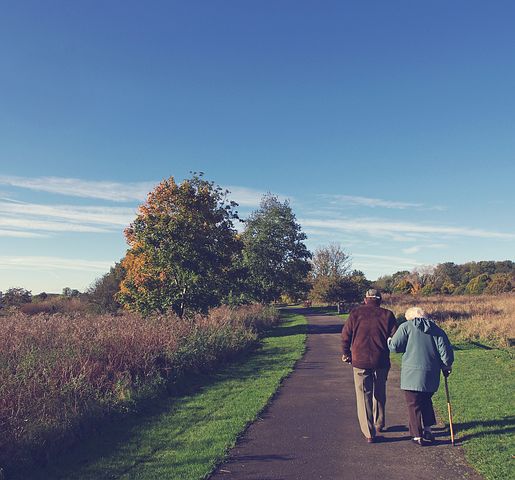 What came out very clear as well is the fact that a completely new generation of “elders” is living in the (western?) world presently. In times when our grandparents were raised, people were really old at 60, dying at 70 or even earlier was normal and when you made it into your 80’s then you were an admirable exception. People in their later years usually spent their time with being bored, waiting for death, taking care for their illnesses, being resentful of children and the younger generations for their obvious lack of respect – and therefore their own loss of being seen as the most important authority in the family.
Either time never changed and everybody played their roles to previously laid out plans, or, in the 20th century when the old order broke down, older people couldn’t find meaning for their lives anymore through social status and were left alone in uncertainty and helplessness.
Ageing in a New World
This has widely changed now, probably due to the liberation movements f the 60’s which is when today’s older people grew up. We have learned that we are worthy individuals and that we do not depend completely on what society prescribes for our identity. We tried that out in our early days – and that has shifted the world. So why not NOW too when we are older and we don’t want to live a life pre-designed by our contemporary society?
This was the Basso Ostinato, the underlying rhythm in all the conversations we had with our guests: “There must be a different way – and I, myself, do my best to find out how and to co-create a different future, for myself and for others”
A Short Summary of the Conversations
The oldest people in our series all affirmed that with age they have become happier and more satisfied than they ever had been before. The most moving conversation about that probably was the one with father and son Foster (The Secret Promise of Aging watch here). The direct transmission of the joy of life in older years is present in Integral Life Practices for Any Age? by Monika Frühwirth watch here) and the never ending desire to learn new things by Lowell Ann Fuglsang (It’s Never Too Late to Begin your Future watch here). Last and absolutely not least our conversation with the well-known spiritual teacher Terry Patten, who led us in a practice where you can witness the transmission yourself here: Spiritual Lessons and Opportunities that Ripen with Age
Besides Terry Patten, we had other contributors talk about the inner path towards creating a different future for ourselves and others. How fascinating the unexplored possibilities we have as humans! Learn about them here: What about our POSSIBILITIES when we get older? with Jon Freeman. A similar idea is expressed by Tom Christensen: New Capacities Emerge in Our Minds as We Age
Lynn Kreaden gives her perspective on Ageing as an Awakening Process Connie Corley’s ideas on Ageing are expressed in Age is a State of Mind
What specifically can we do as we meet our later years in life? Hans Parge gives you specific tips on how to stay healthy and “young” while ageing in Wellness and Prevention for the third half of life
Dr. Sven Werchan talks about the importance of food and its effects on the quality and duration of life in It is never too late to begin to eat the right way
The role of a healthy and vibrant sexuality is discussed by Michaela Boehm in Tantra for any Age and the importance of being in intimate relationships in the later years of life is the topic of Martin Ucik in The Later Years of Life: Shared Purpose in Love Relationships.
What to do with the additional years we have got nowadays? Here is a suggestion by Ann Roberts with Active Wisdom: What Grandparents Can Give Us and Our Children.
How to handle death? Our own or the death of people for whom we care? A still taboo topic, courageously addressed by one of our younger speakers Myste Lyn in Overcoming Fear when Facing Death.
How is “Getting Older” and “Ageing” seen in North Europe? especially in Denmark? Bettina Hartmann gives us her experience as a native, but not yet “old” Dane.
Finally:
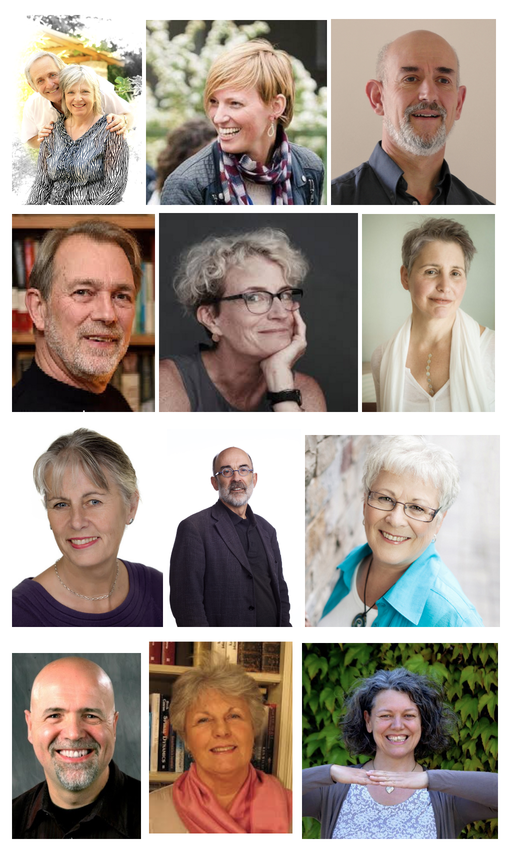 In the AGEISM section, we had a young guest who had only shortly became aware of this phenomenon: Miriam Van Groen in We are all ageist – what to do about it? And Ashton Applewhite, a well-known activist in the “Ageism” – scene who had opened our series last November with YO, IS THIS AGEIST?.
The final celebration of CONSCIOUS AGEING happened online with 11 of our guests in a 90-minute PANEL DISCUSSION. They got to know each other and the desire arose to continue with some group conversations in the future.
We had a constant circle of live viewers, some of which took the opportunity to chat with us live after the main conversation. Most of the times our speakers were present, too, and people could ask specific questions. In other chats, people had the opportunity to give us their views and perspectives on the topic. It is always inspiring to connect with interesting people!
The first round of the CONSCIOUS AGEING series ended with a discussion among the viewers. The now concluded series will be followed up by some additions to this topic. The first one starts on May 26th, going through all June. Come and join us!
Please subscribe to our website and you will get information once or twice a month about our live events where you are invited to participate in all possible ways. Let us know how you see that! And be part of the exploration around AGEING – you are directly and personally connected to that topic – even if you think it doesn’t apply to you (yet)! It will! – Hopefully!
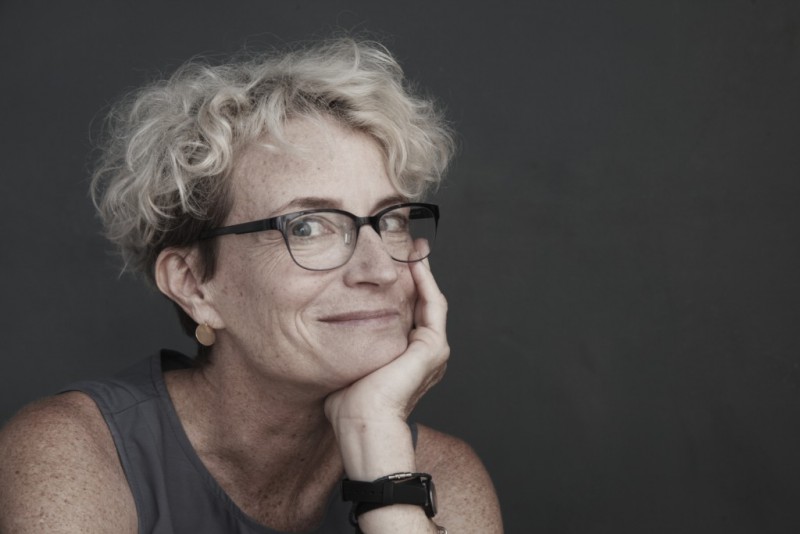
Are you an AGEIST and don’t even notice it?
Are YOU an AGEIST?
It’s not a long time ago that I first noticed that I am behaving as an Ageist. I didn’t even know what that meant, actually I had never heard about it before.
But then, yes, Ashton Applewhite made it very clear to me, that AGEISTS are not only the others but we older people, too. I am not excluded.
So what is AGEISM? It is discrimination of people because of their age. Ageism expresses itself when youz need to be 55 to enter into a retirement community, or when you need to be under 30 to be considered for a certain job, when you tell to a child that it is too young and too stupid to understand or do certain things or when you negate your grandpa to take care for himself instead of being constantly monitored by the relatives.
Ageism is a problem, like Sexism and Racism.
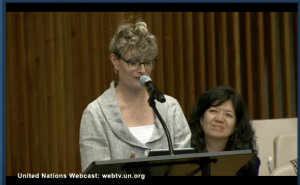
Ashton Applewhite giving her presentation at the UN
We don’t recognize it so clearly as we, ourselves, have bought into the story our societies have told us for a long time: young people are good, old people a burden (and many variations of that)
Ashton Applewhite will be our first guest in the upcoming series CONSCIOUS AGEING. She lately gave a talk at the UN. Watch it here Ashton’s contribution begins at 28:18.
It is amazing how AGEISM pervades our lives. You will be shocked when you begin to think about it and observe yourself and others. It happened this way to a woman in her 30ies who we have invited to join us in the series next March. Miriam Van Groen
We are looking forward to hearing all these amazing people give their contribution for creating a better life – not only for older people but for all people of all ages.
I am enjoying Aging – what a surprise!

Elderly Couple Bent on Cane
Most people believe that getting older is horrible and that we will be afflicted by all sorts of things, illnesses, missing abilities and so on. I believed that for sure and I remember the day when my first husband turned 40 – which was a catastrophic day for him. Not yet for me, as I was 12 years younger. He believed that he was now going downhill and everything would change for the worse.
Well, in a certain way it did. He worked ever harder to establish himself as an architect – and I was ever more frustrated until I finally left him to go to Italy and study opera singing to fulfill my dream of becoming a good singer.
I did discover my authentic voice, I did concerts and taught others how to use their voice, I found an Italian partner with whom I bought my country house, now called Paradiso Integrale. But life was still unfulfilling, full of work and not much success – measured with the high expectations I had for me as a trained perfectionist.
Life turned better after 40 when I entered the self-discovery path. Psychotherapy, NLP, music therapy, my training in counseling, transpersonal Psychology and many more tools which slowly allowed me to see clearer who I was and where I was about to go. The real breakthrough – although gradually – came with my study of Integral Theory. NOW I really began to understand what before seemed to make no sense to me – and what was bothering me a lot. Twenty rich years of gaining knowledge which I never expected to exist and of experience which I allowed myself to have.
Life is an amazing journey.
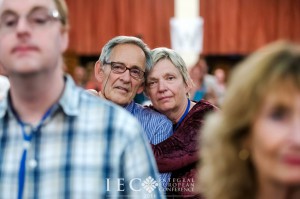
Heidi and Mark in the audience of the 2nd European Integral Conference in Hungary 2016
I realized how packed I was with false beliefs like: in my age, I will never find THE ONE -but after my coaches training in CALLING-IN-THE-ONE with Katherine Woodward Thomas I met Mark and we are a happy couple in “a relationship beyond our wildest dreams”
( Find the amazing book by Katherine Woodward Thomas here: Calling in the ONE on Amazon)

Life gets better and better, the older I get. And this is not only my personal experience. I came across the same statement by other people and I want to share with you this article by Dr. Bud Harris entitled Aging Strong, The Opportunity of a Lifetime
He says: “I am enjoying aging – what a surprise” . And you can do it, too!
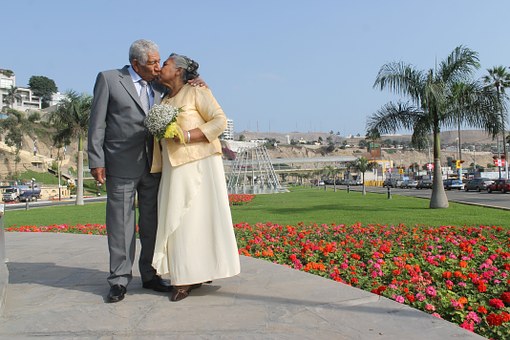
Staying young – no, thank you! by Heidi Hornlein
Today the most important thing in life seems to “stay young”. But if you ask me if staying young would be my ideal, I can only say: no, thank you!

Spring of Life – full of dreams
Looking into the past
When I look back to my young years, 16, 20 (when I married first time) (when life seemed to be romantic love with lots of obstacles), 27 (when my father died and I finally completed my MA), 32 when I left my marriage to go to Italy to study Italian opera, 40, when I felt the physical need of procreation (which fortunately didn’t happen) – and on and on. Life was a constant struggle, a constant research of something which is missing and which I should get or work for.
Now, more than 20 years later, I feel a freedom and calmness which I never experienced before. Also happiness – yes, that’ts right. And that is not only my personal story!
In the contrary to what people normally think about Ageing: the older we get, the happier we become! Think back to your own young years: were you happy then? Really? Or more often than not confused, insecure, inexperienced, full of phantasies and disappointment when they didn’t work out. And scientific studies show that increasing in years is equal to increasing in contentment and happiness.
Staying young is the solution?

Do we really need to be able to do things like this?
So why do we still feel the need to pretend to stay young? Why do we try to be slim like when we were 20 and wear stuff which doesn’t really suit us, only because young people wear it? Why do we use tons of makeup to hide the maturing skin? Because “staying young” seems to be a request of a society who measures everything through the lense of productiveness and speed – the speed of young people.
Are they really more productive than the older ones? I doubt it. Look back into younger years of your life: you still had to learn many things which today you execute quickly and with ease, while then you spent hours to figure things out and get familiar with them. Speed, yes. Older people need to follow their own rhythm, which often is slower than that of younger people. But this is not bad at all: we see more, perceive more, reflect more, when we give things the right time. This is also true for younger people who often tend to skip these moments of wisdom and jump blindly into Doing.
My choice: being as old as I am
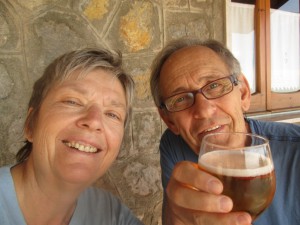
Me and Mark having lunch above the Amalfi Coast – HAPPY
I don’t want to end up saying that being young is “not good”, it has many good and desirable things, but the same is valid for older age. We have gained so much and so many new opportunities open up in every life period. That’s why Ageing is nothing we should fear, but embrace as the time of harvesting our life experience and of creating something new and amazing for ourselves and for others.
“Staying young” might be, in a certain sense, a metaphor for getting older. But personally, I wouldn’t want to go back in my life and start it from scratch, having to pass again through all the crab and all the difficulties which had been along the way. I am glad to be as old as I am. So if Faust offered me to re-do my life, to be young again, I would say: No, Thank you!
MARK’S BLOGPOST on Ageing and Ageism
A peculiarly American insult, to tell someone that they’re history means that their “time” is over, make way for the new blood, take your pension and go play golf. Join a knitting circle!
At Orange, once you are no longer productive, either as a producer or as a consumer (on your reduced income) you become a non-entity economically. Television ads are no longer trying to get YOU to buy anything.
But today that “history” phase of life can last over 30 years, perhaps longer than your “productive” years from 30 to 65 or so. A whole new demographic is emerging that at least can and will vote. So they can’t be ignored completely. And they will not be content with the victim labels of a marginalized group “granted” recognition, however well meaning, by post modern caregivers and charitable organizations.
Like all “de-marginalized” groups, these ”elders” will eventually self organize and form a huge and varied interest group who will not be content with “retirement ghettos” where silence reigns and grandchildren are allowed only for short visits.
And when they do, watch out! Huge changes for all of society will ensue. Obviously who will take “care” of them? And there aren’t enough younger people gainfully employed to endlessly fill the pension plan treasuries for all these old folks. And these 60 to 90+ people want to live independently or in self governing group situations without the usual patronizing guidance of the state.
No longer will they be the “throw-away” people that their own parents and grandparents were. Competent, healthy, and having “out-lived” the values of earlier periods of their lives, when family, career, acquisition and fleeting prestige ruled, they can re-emerge as respected elders, as wise companions, as role models, even as trusted leaders who know how to navigate unprecedented change.
Come join us as we investigate the unexplored possibilities of these new decades of life, as well as the inevitable end of it, that we can design in feedback with our children and grandchildren.
Mark Davenport
Join us at http://bit.ly/integralageing
Leave A Comment