Bridging generational divides
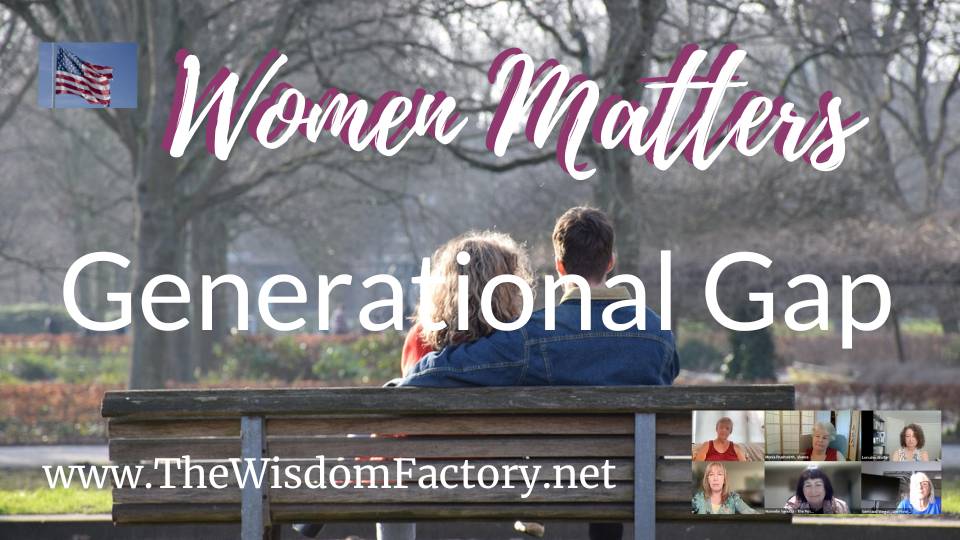
The group’s dialogue underscores the importance of bridging generational divides with empathy, hope, and practical initiatives that address loneliness, resilience, and meaning-making. As society faces swift changes and polarization intensified by digital media, fostering connections between elders and youth offers a pathway toward mutual understanding and communal healing. Embracing the virtues of faith, hope, and love—anchored in shared humanity and intergenerational solidarity—may help us collectively navigate a complex future with courage and compassion.
The conversations took place in May, 2026
### Summary
The conversation among a diverse group of women from three continents centers on the challenges faced by younger generations—primarily Gen Z and millennials—in today’s rapidly changing and often overwhelming world. The discussion touches on intergenerational understanding, the impact of social media, political polarization, and the pervasive sense of anxiety and apathy in youth. The group reflects on their own generational experiences in contrast to those of younger people, highlighting differences in worldviews shaped by historical contexts, technology exposure, and societal changes.
Key themes include the fractured nature of modern community, the search among young people for spiritual meaning and connection, and the importance of fostering resilience, hope, and agency among youth. The group explores initiatives pairing young and older generations to bridge loneliness and promote mutual understanding. They also comment on the cultural shift from advocating for positive change towards predominantly opposing negative forces, exacerbated by social media’s echo chambers and negativity.
The participants emphasize the need to cultivate emotional connections by prioritizing oxytocin-producing interactions rather than adrenalized fight-or-flight responses, suggesting that such connections can foster hope and healing. They discuss their personal efforts to engage with younger family members despite generational gaps, as well as the wider imperative for elder generations to meet youth where they are, offering support without judgment. The conversation concludes with reflections on values, the difficulties of adapting across generations, and a reminder to listen deeply and with compassion.
### Highlights
– 🌍 The group represents women from multiple continents, reflecting broad perspectives.
– 🧠 Gen Z and millennials face unprecedented anxiety, uncertainty, and apathy influenced by global challenges and social media.
– 🤝 Intergenerational initiatives pairing youth with elders show success in combating loneliness and fostering understanding.
– 🔄 Social media amplifies polarization and negativity, impacting youth worldview and emotional health.
– 🧬 Oxytocin-producing connections (bonding and trust) are key to emotional resilience, contrasting fight-or-flight reactions.
– 💡 Younger generations seek spiritual or inner journeys more than traditional institutional religion.
– 💬 Effective intergenerational communication requires curiosity, openness, and nonjudgmental listening.
### Key Insights
– 🌐 **Global Nature of Youth Challenges:**
While political and cultural polarizations vary by region (e.g., between US and other countries), youth worldwide share high levels of existential worry and a search for deeper meaning, especially around environmental and social justice issues. This universal struggle underlines the importance of internationally comparative approaches to youth support.
– 📉 **Impact of Social Media on Youth Mental Health and Perceptions:**
Social media immerses younger people in a nonstop stream of information, much of it negative or misleading, sharpening feelings of helplessness and disconnection. Unlike earlier generations who experienced crises locally or less intensively, today’s youth are globally exposed, intensifying anxiety and a fragmented sense of community.
– 🔄 **Intergenerational Relationships as Mutual Solutions:**
Programs that intentionally pair young people with elders reduce isolation on both ends. These exchanges promote empathy, marketing skills, and emotional support, potentially weakening age-based stereotypes and fostering resilient, more connected communities which benefit from diverse perspectives.
– 🌿 **Spirituality as an Anchor Beyond Traditional Religion:**
Younger people tend toward spiritual exploration and inner development rather than organized religion. This shift points to a need for elders to support varied, individualized spiritual pathways and encourage meaning-making practices that nurture the life force beyond institutional frameworks.
– ⚖️ **Resilience Through Agency and Hope:**
A recurring theme is rebuilding young people’s sense of agency—confidence in their capacity to influence their own lives and society. Encouraging resilience involves helping youth recognize and nurture their strength, counterbalancing narratives of helplessness. Faith, hope, and love (or charity) are seen as foundational virtues for sustaining optimism.
– 🔄 **Acceleration of Generational Change and Societal Complexity:**
Generational boundaries are increasingly blurred, compressed, and multiply defined amid rapid technological advances and shifting social dynamics. This acceleration challenges traditional communication and relationship-building models, underscoring the need for flexible, adaptive strategies to relate across generations.
– 💞 **Biological and Emotional Foundations for Healing Social Divides:**
The distinction between fight-or-flight reactions driven by adrenaline and nurturing interactions driven by oxytocin offers a biological metaphor for social healing. Prioritizing oxytocin-enhancing behaviors—such as compassion, trust, and bonding—could counteract tribalism and polarization, fostering safer spaces for dialogue and community.
– 🤔 **The Importance of Deep Listening and Nonjudgmental Engagement:**
The group emphasizes that beyond demographics or generational stereotypes, treating each person as an individual with unique experiences and values promotes understanding. Approaching interactions with genuine curiosity and openness can break down barriers and build meaningful connections.
– 📉 **Shifts in Activism and Advocacy Culture:**
Historically, movements balanced “for” and “against” dynamics with optimism about change. The group notes that much current activism tends to focus predominantly on opposition and negativity, which could undermine hope. Re-centering on positive virtues and envisioning a better future may reinvigorate collective energy.
– 🕊️ **Bridging the Digital-Analog Divide:**
Older generations often retain memories of more analog, slower-paced socialization, which provides different sources of resilience. Finding ways to help younger people integrate both digital fluency and embodied, present-moment awareness could support balanced emotional health.
– 👵👧 **Role Modeling and Mentoring by Elders:**
Older participants describe conscious efforts to connect personally with younger family members, despite the challenges imposed by different values, priorities, and modes of communication. This intentional engagement serves not only to support youth but also to learn and adapt elder perspectives.
– 🎭 **Generational Value Conflicts and Emotional Responses:**
The discussion highlights tensions that arise when deeply held elder values are not shared by younger generations, causing feelings of hurt or alienation. A key challenge is to accept diversity of values without equating difference with disrespect, fostering empathy without forced conformity.
– 🌱 **The Existential Dimension of Mental Health:**
Participants observe that issues like depression and anxiety in young people are not solely biochemical but also existential, linked to broader spiritual and societal uncertainties. Integrative approaches that address mind, body, and spirit simultaneously may be needed to effectively support youth well-being.
– 🤸♀️ **Balancing Practical and Experiential Goals for Youth:**
Younger people’s preference for “living in the moment” contrasts with elder expectations of preparation and responsibility. Recognizing that generational differences in life priorities exist, elders might use empathy to support youth vibrancy without imposing outdated notions of responsibility or success.
### Closing Reflection
The group’s dialogue underscores the importance of bridging generational divides with empathy, hope, and practical initiatives that address loneliness, resilience, and meaning-making. As society faces swift changes and polarization intensified by digital media, fostering connections between elders and youth offers a pathway toward mutual understanding and communal healing. Embracing the virtues of faith, hope, and love—anchored in shared humanity and intergenerational solidarity—may help us collectively navigate a complex future with courage and compassion.
00:00:01
Penalty penalties topic. >> We are the women matters group from three continents. Are we only three continents? Two continents are missing. [laughter] Good. And we are in the beginning beginning very beginning of May 2026. And we have a a good topic. I will over give over afterwards to Christine. But before we do that, we have a short uh check-in I would say. Okay, Honey, did you you wanted to say something? Yeah, >> I’m Han Lee and I’m here in Cape Town. [clears throat] I’m overlooking the
00:00:38
ocean. Behind me is the mountain. So, it’s incredible view. And yes, we have winter. We just we skipped autumn alto together. We still had summer like two weeks ago. So, it’s quite interesting. And I’m really passionate about this topic as well because of what the young ones are going through in our world. and we can see them struggling. So, I’m really looking forward to our exploration today and I’ll give over to you, Gina. >> Thanks, Henley. So, coming to you from beautiful uh Victoria, British Columbia.
00:01:13
We’ve enjoyed amazing crystal views of our mountains. We actually got out in our sailboat last week and it was the perfect summer day, perfect sail over, perfect evening, perfect night, perfect morning. And it seems that we’re getting another weekend of summer, but we’ll get back to our normal temperatures soon. This last week uh uh yesterday we commemorated the Battle of the Atlantic, which was a big uh contribution that our Navy did. And it was very sobering once again to realize what we’re capable of
00:01:42
and uh and hopefully we can be capable of better things in the future. So, it was kind of interesting just it’s always an interesting day to commemorate and I’ll switch it over to you, Lorraine. >> Well, I had a wonderful day with four of my 30 year olds in my life yesterday. Uh the kids came down and um took me and their biological mom to the wild animal park and we had a great day al together. So uh six-year-old granddaughter and all those 30 year olds dealing with the world. [laughter]
00:02:26
Uh it was a great day. So I’m looking forward to our discussion. Christine. >> I’m Christine in Carlsbad, California. Um had a good couple of weeks. Um this past week, one one of the highlights was I went to uh James Taylor concert and he was fantastic. He puts on a great show and so many I mean almost all of his tunes are very well known and recognizable. So that was fun. Um, it took me an hour and 45 minutes to get home though cuz I was stuck in so much traffic. It was crazy. Um, so what
00:03:15
should have taken probably 40 minutes took an hour 45. So that would that that part wasn’t so pleasant. Um, getting ready for the icon conference. uh working on my presentation and thinking about things, helping Tom with details. And uh the nice thing is my uh daughter and son-in-law are going to be there for a portion of the conference. So that’s kind of cool. They’re coming to Denver for it at their dad’s urging. Uh they decided they would join. So that’ll be interesting to see what their impression
00:03:49
is of uh these integralists, you know. Um, what else? Uh, I joined the League of Women Voters and I went to my first meeting yesterday and um we’ll look for opportunities to help get the vote out, help with um any issues related to kind of keeping our uh voting system intact and untainted by um well by whatever attempts there will be to um make the the election illegitimate. We’re trying to make sure that it just stays stable and works like it always has in the past. So, um yeah, that was that was
00:04:37
encouraging. I liked being there. Um liked being with the women. Uh and I will pass over is um Victoria, can you do a check-in? Otherwise, Heidi can. >> Victoria, are you there? Okay, I take over. We had wonderful two weeks almost like summer but a nice summer when it’s not yet too hot but it didn’t rain so maybe tomorrow it will rain. My garden is good and the result is in my shoulders uh because I overworked good. Uh altogether I’m happy preparing the nest for my future husband who will
00:05:23
arrive in two two days. So I’m excited and yeah and I don’t have uh young people around. Uh I only have old people around. So I’m relying on you that you uh can uh contribute to this topic. Yes. Victoria, are you now here? >> Yeah, she seems >> I’ve just arrived. Yeah, sorry about that. I mean, I’ve I’ve I’ve heard everybody, but I was in the car and um >> check in. >> Yeah, check in. Um well, the I guess the the the most obvious check-in for me in
00:06:05
my head is um that I had dental surgery last Monday. Everything seemed to go fine. And of course, as these things are, Friday night I was hit by um everything went arry and I’ve had a just a hellish weekend. Um trying to cope with the incredible pain. Um so hopefully after this meeting I will be able to go to the dentist and um but it’s it just anyway so it was it’s it taught me actually it was a good lesson because it taught me a lot about how um you know all my Buddhist studies about
00:06:41
how no no lotus without mud and um Tiknahan says um you complain about the toothache but what about celebrating all the times that you didn’t have a toothache. So, I’ve looked back over my entire life and thought, “Wow, I should be incredibly grateful because this now I know what the toothache is like.” Anyway, that’s it sounds frivolous, but it was a pretty rough weekend, but um anyway, hopefully it’ll all subside soon. And happy birthday, Lorraine. Is did today the actual day?
00:07:12
Okay, happy birthday. We’ll have to celebrate uh belatedly at some point. Um Okay, I’m I’m going out. Yeah. So, that was my check-in and I’m I’m going on mute for a second chance. I just have to check with the dentist about the appointment later, but I’m here. Thanks. >> So, uh, Gatra will come later, but I think we will start. Christine, you have suggested the topic. We haven’t really named it yet. So, would you like to to introduce it and start? >> Well, no. Hannah P H P H P H P H P H P H
00:07:44
P H P H P H P H P suggested the topic and I’m curious why she focused on um you you mentioned specifically I think Gen Z or was it just younger people in general? >> It was younger people in general, Gen Z’s and millennials. Um >> okay. >> Yeah. That they are really struggling currently with lots of apathy very lots of anxiety obviously uncertainty because of what’s happening in the world. lots of overwhelm and you thank you for the for the um links that you sent Christine because it was
00:08:24
amazing because in our parts of the world I just spoke to my daughter earlier just to get her view on it as well cuz she works with Gen Z’s she teaches them at university and [clears throat] she said the the effect of that research that you shared with us also the you know the Google extract that you shared is that from the rest of the world I think the polarization is not so big so we don’t see that much of the male and the female difference in what they’re reaching for because obviously because of what’s
00:09:04
happening they’re looking for something more than themselves we see that especially with Gen Z’s because they care a lot about the earth the world, humanity a lot more than previous generations did. Think of Gria and the likes. Um, so in her in her mind that polarization where the males are going back to traditional religions and hierarchy, the male role and the females more to the spiritual side is not so evident in the rest of the world. But I can just speak from my own experience being part of the some of
00:09:42
the jinky and human design communities and there are tons of young people in those communities coming together every week. So it’s more spiritually based communities than rather religious communities and they’re mostly are actually most mostly women although they are young men as well but mostly women and they are it seems like they are it’s more inner journey that they’re exploring than an outer journey going out to a religious event or a community even it’s more inner journey but they
00:10:18
want to be in community they’re looking for that substance of connection, especially in this virtual world that we live in. And I wondered how we as Cronhn and wise ladies can support them better because we come from a very different time and yeah, it and actually we created the world that they currently live in. We co-created it. So I was just wondering about that. >> Okay, get out. Uh you’re welcome. Will you have a short intro? H not introduction uh check in and then we go into the topic.
00:10:59
>> It’s it’s fine. Sorry for being late. Happy to see so many faces. And um yeah, I’m I don’t know what you’re talking about. So I’m just thread myself in. >> Okay, go ahead. Who feels called to contribute? >> Maybe. >> Oh >> yeah. No, of course maybe a short uh summary for for Getro somebody. >> Yeah, I won’t do that. Yeah, I think actually actually Victoria, you actually initiated this last time where you shared about you you created the curiosity with me because
00:11:53
you shared about your experiences with Beatatric in New York and the young people being so anxious and then the people at I think it was at the church a community at a church young people who were so happy and so joyful. Um, so you actually started this by the [laughter] way. So good route. It’s to really explore how we can support the younger generations, especially the Gen Z’s and millennials because they’re going through so much apathy and overwhelmed and uncertainty and anxiety and the likes. And I was curious because
00:12:32
of what what you shared, Victoria, because you shared these two different experiences. And then um Christine was so amazing to share links with us of of research from Stanford and also Google extract which interestingly I don’t know if everybody had time to look at it but which interesting demonstrate that in the US specifically the young males are going back to traditional religions to the male hierarchy um and where the where the where the young women are going more to spirit spiritual type communities
00:13:11
and that’s quite interesting. Um, so I’d love to hear your views on that as well. So, so Victoria, you go ahead. >> Um, well actually what I wanted to ask first because I have this rattling around in my brain and I can’t remember if it was here or in another one of the groups. Um, quite quite a long time ago or maybe it was in one of my classes, I don’t know. Um, there was a whole uh project that was started somewhere. Um, and I’m very vague because I don’t remember any details, but it was an
00:13:42
actual initiative pairing up um or maybe it was Gina um because of your studies. Well, anyway, what I’ll tell you what I remember and you can help fill in the details. Um it was a whole initiative somewhere um to pair up young people with elderly because the statistics uh come out the same in the sense of loneliness um anxiety um a lack of being recognized or or validated. And so wherever this was that this happened and I I don’t remember where um it it really was a [snorts] huge success and I don’t
00:14:21
know if it’s continuing um but it was uh so it was a but it was it was very very intentional like like uh uh like going to the theater for example or you know specific activities and pairing up whoever wanted to be involved in the project. Um I think it was the like the youth would sign up and that they would be paired with elderly people who were were seeking comp companionship and it was a really beautiful thing. Um it was a big article I read but um but did we talk about that here at one point or
00:14:54
not? I I don’t remember. Anyway, it was so inspiring because I thought that’s something that you know kills two birds with one stone as it were that um because the I think in our age group we we most of us have certain skills where we can kind of dip into social med well like right now I mean here we are as elderly as we are we can still well I barely got on this call on my phone but um but we can still we can access the new technologies to have companionship and community. Um, and we can still, you
00:15:30
know, get together in person with our friends because we’re not scared. I have a very close friend who’s terrified of seeing people in person. Um, and he only communicates he he’s even terrified of the telephone. He he told me on the phone the other night, he said, “This may be our only call in their lifetime.” But um so it’s not necessarily a given that any age group of course in the society we live in now because there’s so much fear I think um anyway I’m not
00:15:56
going to give a lecture but but if does does that ring a bell for you this thing about the elderly and the young the youth um because I it’s in it just popped in my head now. No, I only know um I think it was New York Times or um Weekly magazine in Germany that paired up uh people of opposite uh parties and and affiliations [clears throat] to meet people that you normally wouldn’t and have conversations and yeah. So, and that was very successful as well. So at one time I thought why not and
00:16:40
then it ended [laughter] but um but I thought because of social media we are so we don’t have the same um TV programs we don’t have the same so when there were only three channels you could even talk in school about them but now it’s it’s kind of you only meet in your bubbles. And um yep, for for me it’s a little bit tricky is the false word, but um I have millennial daughters and then grandkids uh between two and um 11. So I don’t normally meet Gen Z people and my clients or the the people I train
00:17:44
they are around 40. So they are more in my my girls background or uh time frame. So, I’m I’m a bit lost when it comes to people’s people in their 20ies. So, yeah, that’s but I think that’s uh what Victoria said, matching [snorts] people of completely different background but with the same needs. That uh sounds pretty good. We had some projects in Germany where young people, I mean teenagers uh were asked to visit elderly people in the nursing homes and just have conversations and ask them questions
00:18:41
what they normally don’t get from their environment. And that was also very very valuable for them. Um I I was Are you finished, Gertrrad? >> Yeah. Yeah. >> Okay. I was struck by the the Stanford article that said, you know, if you if people actually meet in person, even if they have very differing ideas politically or whatever the differing ideas may be, if they actually have time together, they are able to see the commonality and feel okay about the other person. So, I don’t know. I don’t
00:19:24
I don’t do social media. I’m not on social media, although my sister has a tendency to send me Instagram posts all the time. [laughter] [gasps] Um, but I just feel like social media kind of it amplifies negativity. You know, there’s a few negative people and it gets spread out there. Um, and that’s such a hard thing, I think, especially for young people to overcome. We have a being older, we have a a broader life experience um that tells us not everybody out there is a jerk, right? And I think Gen Z’s
00:20:04
probably are more affected, I think, by social media. They tend to feel because of what they read online that things are really a lot more dire um than they are. And I think maybe that’s why they’re drawn to spirituality because you actually meet with people and you are connecting um and there is purpose and and meaning to that. But you know I’m also thinking when the time that we grew up in the world was pretty unstable in terms of the cold war and in the states we had multiple assassinations. We were
00:20:40
diving under desks for nuclear threat um drills. Uh we had war. There was just so much terrible stuff going on. But I think maybe the difference was um we thought that we were doing something to make the world better. And I think there was a sense of maybe resiliency or belief that we had agency to have an impact. And maybe it is that Gen Z does not feel like they, you know, feel a little helpless. They don’t feel like they have an impact in the way that, you know, when we were dealing with a very disturbed world in the ‘ 60s
00:21:20
and and early 70s and well, the whole 70s, I I think we felt we could make it better. And maybe Gen Z’s just feel a little helpless about that and more individualized, less community, more individualized. Maybe that is something to be transported to to them to say um it’s not that our [snorts] youth was loveydovey everything fine. So like and uh yeah I was in B with 300,000 people against um station stationing of the Persing U rockets and we really felt like when we have them we are the first target.
00:22:15[laughter] So even in in in Germany, I mean in all wars before the the world wars, but um it was always people always went across Germany and did a lot of horrible things. We did too, but but I mean like we are really in the middle and and we were in the middle of the cold war. We were just like we are wiped out the very first [laughter] um nuclear happening. So so that felt very what you just shared uh Christine that felt very tangible um I think in the whole generation but for us it was kind of
00:23:16
We are front line. We are the ones that that get hit on the head first. And so so and maybe that that’s something we have to transport to because history doesn’t the narrative the the talking is not that way. It’s just facts and whatever. And now we have so many nuclear warheads. But when the whole thing started, it was really scary. Yeah. [clears throat] You know what? I agree with you Gat and Gina. I’ve spoken to my daughter about this that we also went in South Africa. We also we went for apartate all the
00:24:10
horrible things that happened here to the people and things like that. But the difference was we didn’t have social media. There was not lots of fake news and we didn’t really live especially I didn’t I can’t speak for the people who came after me but I didn’t live the global war on on the news on television and because of television and social media and the internet we are all experiencing it now even though we are far away you might have heard about something but it was not so in your face
00:24:41
but I think what makes it different from them for them is from individual level is that they live in a very performative world because of social media. So the true self um they’re so disconnected from that because of that per they may show up as something better than everybody else. So I think in that sense they live in a very different world than we did. Yes, they we’ve also g gone through all these terrible things, but now it’s come for me closer to home because it’s all over and you
00:25:14
don’t really know what’s what’s the truth and what’s fake news anymore of what’s being shared on social media and it’s because they also I think it’s also because they grew up with this in front of them. So they will they are they’ve got a much more narrow mind than we had when we played outside. we went out played with our friends. So to connect on here is very different when we do it in people you know in person with somebody else out there. So I think that impacts it as well. And I also just from
00:25:46
my own experience in my professional life is when I when I do workshops for clients I see the the generational gaps are suddenly much bigger. The disconnect between Gen X’s for example and millennials and millennials and Gen Z’s from professional point of view is massive. I didn’t experience that much when I grew up like between the boomers and Gen X’s and so forth. So I think that that’s also something because of everything happening so fast and the impact of the internet and
00:26:22
social media that that has really that that those chasms and the global obviously the glo the global um you know um influence that they have from so many different sides impacts it as well. So my question would be now at this point how far are we impacted by this time and the the means and social media and even if we don’t listen all the time but we still get a lot and what is the difference? Why might maybe we be more um resilient uh than the young or let’s say it in a different way because we know still the
00:27:14
analog analogous world we might have a different counting as than they have I mean having the cell phone in front of that you you don’t see right and left you know so what what could we contribute to open the I don’t want to say the mind but open the possibility of seeing the world as it is instead of the the world in video in in pictures prefabricated or false or whatever might be right pictures may be also fake pictures so what what could be our >> the before answering that question I
00:27:59
would like to add to do that. >> Before answering that question, I would like to ask uh add another um layer or another uh flavor to it. I think what didn’t happen at I mean we were so much against atomic power and the the big business and things like that but it [clears throat] well there were some people like uh if so the the terrorist people that took it to a personal level and and executed but mostly it was kind of really fighting hard over ideas but not like de demonizing the the people or um
00:28:54
yeah press enemy of the people or uh just because you’re Democrat or because you’re uh Republican or the the equivalent in our countries um that you make those people like no you couldn’t even talk to them in a good way uh to be demonized yourself. I mean, it’s it’s this is something that I felt really like because you think in a in a different way than I do, you’re not human. you’re have to be eliminated or so the the the language is pretty much in that direction and I think
00:29:48
that’s a layer to uh yeah not having those dialogues even online in a good way. So Heidi, now back to your question. I think another factor for me is that the generational change has happened at a faster and faster pace. When I was young a million years ago, there were only two generations. There was the older generation and there was the younger generation. And even and I would doubt that people considered different generations prior to that, you know, with that much intensity because, you know, we we had the whole hippie
00:30:43
thing going on and the 60s exploded and there were very dramatic changes. I mean, we came out of the peacefulness after World War II. you know things were I mean the cold war was going on but most of the time that didn’t touch our personal lives um and we were aiming for calm and you know like in spiral dynamics that blue meme everything is secure again blah blah blah and then the 60s come along and there was a a big explosion in a sense a social kind of explosion so I was acutely aware of those two
00:31:19
generations but the boomers lasted almost 20 years that generation and the other generations following it are get shorter and shorter and shorter it seems um when a significant shift occurs and I guess that’s paralleling big changes in the world you know 911 was a big turning point for us anyway um those kinds of things and of course we get the news from what’s happening all around the world in a much more intimate way we’re aware ware of these changes. So, it’s like the demand for change
00:31:57
seems to be accelerated um and exhausting and disorienting. Um and it’s sad to look at our young people and think, okay, now are they X, Y, or Z or they A or where do we f? So I admittedly cannot really discern those kinds of differences. But um yeah, so that’s that’s sort of been part of it for me. It’s just everything spins so fast just as you’re adapting to one thing. Boom. It’s like technology, you know, I finally I finally get something online and then, you know, there’s an advance or I upgraded my
00:32:43
Lenovo Yoga and then bing it inert inserted itself and bumped out Chrome, you know, and I wasn’t expecting it. So, there’s all these little annoying kinds of things you have to adapt to, too. And I don’t know, for me, it’s unsettling. Retiring has been nice because I really don’t have to engage that directly uh you know I can choose now I I have the option so I don’t know maybe maybe that’s another piece of it for well for me anyway >> I think to your point though um because
00:33:18
I wrote down the dates here because I don’t like the categorization either it’s too complex for me um you know the the generation zed um were all born well not all It’s they grew up in a post two 911 world. And I think that if I look at the difference between just traveling [clears throat] and school drills, most we ever had was a fire drill. Um we didn’t have to go through all this nonsense. We used to go to the airport and just enjoy watching planes. We went into the airport and go anywhere we
00:33:52
want. And so, you know, teaching children that you have to walk through machines and take off shoes. So, um yeah, I think it’s I think it’s a hard world to be in. So if I if I can turn it back though to the positive. So what what do we do with these kids? Like how do we make it uh different? And uh the only group uh I really hang out with uh in that age group are the kids I go to school with and my you know that’s really it. Um so I find that they’re they’re living for today. they’re not
00:34:26
looking at preparing for any form of um longer life. So they’re I mean my my personal trainer is off to Guatemala to hike a volcano and like I never did anything that fun when I was his age. I was working. Um and it’s just like okay so they’re living in the moment because I don’t know they think there’s enough moments to worry about and um I find the same thing in my daughters. My daughter and my son are both within the millennial and they are they and their friends, a lot of them are just living in the
00:35:00
moment and they’re not doing all the things that we thought was responsible. Um so, you know, are they saving money? Are they are they able to to work enough to be able to buy a home or rent even afford their rent? And I think that there’s some bridging that needs to be done between what we went through because as you say, I mean I was deeply affected in as a Canadian even uh about world the Vietnam War because uh we saw these really cute guys come up to Canada and um I was horrified that they would
00:35:34
go back in combats, you know. Um and also my whole university was a bunch of um do draft dodgers. So um yeah, but I just think that one of the uh positive things we can look at is what does contact look like so that we aren’t categorizing and I think the categorization is part of the problem. So um I attended a lecture this week on uh from our uh ombbudsman for seniors in BC and he was referring to Lasal University where they have the older adult residents right on campus and they don’t call them seniors they call them
00:36:07
students. So I think labeling is tough and um boomers keep telling at least in Canada we’re being told we’re entitled. I’m like, “No, we worked hard and we went through a lot. Like, you don’t know what we went through.” And >> the kids are going through a lot, too. So, um I think the more intergenerational contact we have, the better. And it’s really fun talking to the kids I go to school with because I think everything’s so amazing. I’m like, I’m not amazing. I’ve just lived longer
00:36:38
than you have, you know? But, uh they’re smart. Just I don’t think they’re full of hope. >> Yeah. So the word that I was thinking as you were talking Gina was fatalism, you know, >> do it now because we’re not guaranteed that the world’s going to be around in a little while. And I guess again coming back to people feeling resilient like is the world resilient enough to, you know, not succumb to terrible things? Will the world still be around? And and then individually having
00:37:13
resilience to get through hard times. I I think, you know, you also make a good point. It’s like each generation thinks they’re so unique that what they’re going through has never been gone through before. Um, and I think young people have to realize that stage of their life is a lot of uncertainty and anxiety. It’s just that’s normal is to not know and to be searching and to be looking in various directions to find, you know, meaning and purpose and connection. I mean I don’t it’s not automatic. It has to be
00:37:50
cultivated. Lorraine, I’m I’m curious if your stepkids said anything this weekend. Did they give you any sense that they’re coping well or not coping well? They don’t volunteer a lot. Well, you know, again, their busy lives. I try to I try to meet with them separately. This is my two stepkids who live in the, you know, one in LA, one in Irvine. I try to meet with them once every three months, and I I find myself asking a lot of questions to draw them out. And it’s a genuine curiosity, but I
00:38:43
really work at it. And it’s it’s almost like I have and I haven’t really thought about this before, but it’s almost like I have an unconscious mission to connect with them, to reach them wherever they are because they wouldn’t really naturally volunteer that stuff. Um, so I I’m not quite sure how to how to answer that. Uh, but I find that when I do finally hit on some topic that’s meaningful to them, they’ll get animated in the old-fashioned way. And um, and I feel that connection more.
00:39:28
And then I have a chance as an elder to say, “Wow, that’s really impressive.” You know, to to give them that boost like, “Yeah, they’re on the right track.” You know, you’re impressing me and they do. This is not fake. Um, so, you know, I’m really working at it. I’m thinking about it the whole time. It’s almost like therapy, like doing therapy and wanting to engage. and I have to really work harder than I imagined I would to engage with them. So, I don’t know quite how to answer it, but
00:40:04
it feels like getting them to engage in a way that they could giggle and laugh at themselves and, you know, feels like a mission because they could stay in a very remote place. And I know what that feels like too because I’ve done that myself. But um yeah, so eventually once we’re once we’re all laughing then it then I can relax but I feel like I almost have to break the ice every time and I don’t see you know it’s not like having my kids in town or something like that like your situation. So it’s it’s
00:40:43
interesting. I just do the whole engagement thing consciously because it doesn’t always happen naturally. Christine, I’m curious. The [clears throat] voting group that you are part of now, what are the ages of most of the people or is it all across all ages? >> Did you ask about the voting group? Yeah, old women. I think uh this was a new members meeting and there were 15 people. There actually three men. Um but I think almost everybody was retired. I think one or two out of the 15 were still working.
00:41:31
But yeah, people who have time on their hands >> or know it’s at risk. >> Yes, that too. Mhm. >> Yeah. But you mean the assumption that we’ve always had what we consider as women, the rights we have now. We didn’t have a lot of that. So yeah, and also understanding the complexities of that. It’s a complex thing that’s being proposed to make change those changes. And so you actually have to engage in understanding what that means. Yeah. There’s a group in Germany they call
00:42:14
themselves grandma um um um grandmothers against reaction uh reactionary like right ultraright and they are quite active actually that brings up an interesting point I think a lot of the polarization in our societ society. Um, and as you all know, I’ve been, you know, I’ve been sort of doing a deep dive into like the Buddhist world, um, in recent years. But, um, what’s come up many times is that the idea that our society is moving more and more towards being against things than being for things. And
00:43:02
advocating for uh, virtues and values um, automatically brings an element of hope. And Christine was talking about like during the 60s and um you know I the 60s that’s when I was you know really little and it was a very scary time because my mother took me out of school on a regular basis to march in the streets against the Vietnam War and um I wore a black armband to school and was arrested at the ripe bold age of 10. Um [clears throat] I even have a police record. Um but it I think the idea of um even even in the
00:43:40
60s when when people saw for for to a great extent was you know here in the United States especially because of the draft the being against the Vietnam war and but there was there were so many pro- movements the pro- um civil rights still continuing pro- women’s uh li women’s liberation um the pro you know there there were a lot well even the peace and freedom the whole idea of the flower children the the music there there was a a balance of so there was that’s where the hope entered in and spiritual teachers
00:44:19
routinely I think across all all you know religions or whatever um address that that you you’re you’re moving towards a better future and not fighting against the the the evils or the ills that you perceive. And I think social media has played a huge [snorts] role in this negativity of um everyone. I’ve even seen it myself that that um if I you know I heard a lecture the other day that I thought was absolutely outrageous and um and I immediately wanted to spend the rest of my day drafting a letter to the
00:44:58
lecturer listing all the egregious points that he made. Um and a friend of mine said you have a deadline to write up the the syllabus for your own upcoming lectures. Why would you want to [laughter] spend all that time in a negative pursuit criticizing somebody else, you know? And um and the reason I wanted to do it was uh was because I thought this this man has a huge influence on the Gen Z’s and Gen whatever gen he’s teaching at the university. And I thought I you know it really pains me to see a negative
00:45:35
influence coming in for these kids that don’t know the difference. they don’t know one thing from another at that you know in that field. Um but but it was a cautionary tale for me personally. I thought why is it that even I am drawn to um fight against something or criticize something or get into an argument about something that I think it’s I think it’s like an infection. It’s like in our whole culture. I really like your point about the better future though because I think
00:46:05
that’s where everybody, it doesn’t matter how old you are, is a little concerned right now because of the damage we’re making to the planet. And maybe that’s why people run off to Guatemala to hike a bike a volcano is to not to get away from that. And I think it’s also a physiological um evolutionary way to to um look where the danger is and fight it. So like fight, flight, freeze is one of the first things that human nature knows. And and uh I think Christine said it needs to be
00:46:49
cultivated to to say I’m not in mortal danger. [laughter] So, let’s sit around the fire and and and and sing or chat or whatever and uh we have guardians around so it still functions so we don’t get overrun overrun by the enemy. But uh but actually what we really want is not adrenaline but oxytocin. And but we have to to consciously cultivate that by parents, by teachers, whatever. So I think it’s the default um way of yeah ancient history and and Trump and and uh his luckies they they feed into this
00:47:57
very survival driven thing and And this works. [laughter] [snorts] So there is something that we need to do in order to cultivate something else. >> But I think >> and I think that’s the the Gertrude. I was going to say you should trademark that saying. I like it. Oxytocin not adrenaline. [laughter] That says a lot. Three words. And um Victoria, I think it’s great that you your syllabus notwithstanding, but it’s great that you would say I want my voice to be heard. You know, I have
00:48:50
something important to say. Um and an idea that, you know, somebody would listen. Again, this the sense of agency that, you know, I can put something out there and be heard about it. So, I think it’s a good thing. I hope you got your syllabus done, but you know, good for you. >> I didn’t do either in the end. I haven’t done either. [laughter] I got the toothache. Um, but thank you for that validation. Yeah. Well, I think to bring it back to the spiritual, which I think is how this whole thing started, if
00:49:19
Honoly was recalling. Um you know one thing we see again across the board I think in in all spiritual paths or religions is you know I mean in Christianity well in Christianity and Buddhism I know the rest I can’t speak to um with this much uh knowledge but um you know the three cardinal virtue of faith hope and love and how everything keeps boiling down to that and that’s that’s true I know it’s true in Christianity and in Buddhism that those um are brought up as um I mean slightly
00:49:52
the the hope is a slightly different language in the Buddhist tradition but um but that I that sense that that there are these fundamental human qualities and yeah and to Gertrat’s point yeah that the um I mean Christine and Lorraine are the you’re the professionals um in the the uh psychotherapy uh lingo but the you know the reptilian brain thing that that the um the fight, flight or freeze, yeah, is is the lowest level as far as I’ve been taught. And and if we devolve to that degree as a race, um I mean, as a
00:50:33
species, then it’s inevitable everything is going to go, you know, go towards destruction. Um and if we if we, you know, if we activate the higher Yeah. that and that’s where the I guess the oxytocin comes in too. I mean, isn’t that isn’t that the what uh the the the bonding between a mother and a child is isn’t that oxytocin that’s being activated there? Um, so it’s it’s that um, but it’s interesting that like even the the the so-called whatever positive hormones. Um, it’s interesting how a lot
00:51:10
of, you know, professionals I’ve been told, you know, by by doctors and thing when I I’m trying to battle depression, they say, “Oh, just go for a jog, go for a run.” You know, they’re looking at on in a very like anim animalistic it I I know it’s true, too. I mean, I love nothing more than exercise, but but there’s a little tiny voice in me that thinks this depression is an existential situation. I need to tackle it on a spiritual level, too. Not that I shouldn’t go running or swimming or tap
00:51:40
dancing, whatever. There’s there’s another element that we’re not just animals. At the end of the day, there’s something else that needs to be nurtured and cultivated. The human spirit or whatever you want to call it. Um, you know, which I think is why we’re all here. You know, the we’re the women that matter about important matters. [laughter] [snorts] I’d like to put in a good word for our survival mechanisms. Um, they really they only kick in when we perceive danger. And I think this
00:52:13
culture is a huge part of the problem. I think uh the fault is is in the stars, dear Horatio, and not necessarily in ourselves. I think we as individuals get a bad rap because this culture is, if you’re into spiral dynamics, it’s this very orange competitive ego, ego in a bad sense and um perfectionistic and it weighs in on us. It it like it’s it’s overdone and overdrawn. Sorry, I have to I have to get that bell like that. You go on. We are almost at the top of the hour. So, we could also wrap up.
00:53:10
Uh what what did we learn out of this conversation or what do we need to add? who feels to start start >> well I I think if we can encourage younger people to get back to Hannal’s point you know to be more resilient um and not to focus on the negative too much see their own um self-efficacy is what the psychologists would call it but agency whatever capacity that they believe they have the capacity to direct their own lives and don’t feel so helpless and feel like they can bounce bounce back from some negative things
00:53:49
going on in the world. Thank you Christine for that. I actually was sharing that and I got sh all over my body and for me it’s also listening to all of you. Thank you for all your wisdom shared and your experiences shared um to guide them back to their life force. It’s like they’ve lost touch with their life force, whatever that means for them. But for me, it’s mental, emotional, spiritual, and physical. It’s not either or. It’s all four aspects of ourselves energetically as well
00:54:28
because of this highly technological world that they grow up in that they’ve they don’t they see themselves completely separate from everything and it’s getting worse. So I think in whatever way we can presence that to them and like when we’re with our grandchildren and our children to remind them that there’s life in us and that then because that gives us hope. Thank you. I’m >> I think Victoria you took it right back. Um, you say faith, hope, and love, and mine, it’s faith, hope, and charity. Uh,
00:55:11
so it’s close enough, but I think that, um, that giving the kids a sense of hope that it’s not all headed in the wrong direction, that there are good things happening to, and mother nature’s pretty good at dealing with what idiots we are. So, we should um, you know, there’s there’s hope and I think maybe we should just help the kids find hope again and charity. I put in um one uh document and the other one is a presentation about um the we call it the appreciators traffic light model. So it’s like
00:56:04
red is adrenaline and then you have the normal and then you have flow. This is green and this is so when you I I didn’t find every email address. So when you click on that or save it and then uh ask for permission then I can give it to you so so you can access it. The other one is a document you can download. Um yeah, it’s like how how to deal with our brain in an effective way. Um yeah, thank you. It was interesting I think and it um there was something like where do I meet those people? Where do I need need
00:57:01
Gen Z? Because they are not in my RA uh in my radar field. So, it’s alpha and millennials. Yeah. So, I will find a way to to look. By the way, where’s Mona? She said she couldn’t come. So, still uh Victoria and Lorine and me, I think. [snorts] >> Um yeah, well, thank you as always for the conversation. Um was a good distraction for my toothache. [laughter] And Gina, yeah, the faith open charity. That’s the Yeah, that’s the old um the old beloved translation of charity. Um
00:57:59
yeah, the modern translations say love, which of course is such an ambiguous word. Um but I think uh yeah, I I um I’m getting distracted again by the toothach. And I also have I have another meeting, but um thank you everybody and may we persevere in the positive. So, this is a wrapup kind of thing. Sorry, I had a pop out. Well, I I know that I’m just not I’m not going to figure out all the subtle differences between all the different generations, and I’m I’m probably going to use my
00:58:37
cookie cutter approach of assuming I don’t know anything in about this person, and I’m going to start from scratch, and I’m going to be curious, and I’m going to revel in their wins, and I’m going to give solace in their sorrow and their pain and just treat everybody the way you know um I I’d like to be treated kind of thing and listen mostly listen thank you for the conversation >> and I uh met a person 24 years old and I was so astonished how she behaved. I think I told you about that in a
00:59:25
previous session and I thought oh my values are so different you know I in the house of others wouldn’t touch anything you know and and and clean and whatever and they are just so I I didn’t think it was a generation problem I thought it was a personal problem and so now talking about these things it might be a generational problem that I am or we are so sure of our values and I think they are very valid our values and then when you see other people like don’t care about the things we care about that’s hurting and
01:00:05
so so the question is let we do them what they want to do and hurting our feelings hurting I don’t know what else uh whatever and destroying ing value systems or we will just say okay that’s how life is. So I want to leave you with that and [laughter] and everyone needs to have their own decision on that. >> Thank you lady. >> I think that was a great write wrap up Heidi. That was actually perfectly said. Thank you. >> Happy birthday Lorraine. Happy birthday. >> Happy birthday.
01:00:53
>> See yall later. >> Bye. Bye. Bye.



Leave A Comment