Here is a survey about YOUR future when you get older: How do you see the second half of life?
Please go to https://de.surveymonkey.com/r/8NZQ3XV
OUR FIRST COMMUNITY LIVE CONVERSATION – about AGEING
Hear our presentation at the INTEGRAL EUROPEAN CONFERENCE in Hungary,
May 6th, 2016
We were pleased and grateful to witness a lively interest in the topic.
You are invited to join the discussion by filling in the survey above and by joining our Facebook Group http://bit.ly/integralageing
Hear our pre-conference talk about what we will be talking about on May 6th, 2016 in Siofok/Hungary.
“The Third Act” with Edward Kelly

HEIDI´S INTRO
For many thousands of years people had a short life span. Only very few arrived at an old age, most people died before their 40ies birthday. Child mortality has diminished and life span increased steadily for the last couple of hundred years. Now, for the first time in history, “old age” begins about 20 years later than it used to start. Today you are not any more old with 60. You have the probability to live other 20 years in reasonable health and with enough life energy to start something new. The Third Act today is not the period before death as it used to be (this would now be the “fourth act”), it is a period of a redefined life – if we take it on as such.
Many of us over 60 are getting aware of this fact. We don’t feel old and we don’t want to be confined by the traditional expectations for people over 60. There is a difference between men and women. Men often struggle with retirement because their life suddenly loses the meaning which often was determined by what they did professionally. Women can seamlessly slip into grandmotherhood and find their meaning in taking care of the new generation. That has always been a choice for grandparents. But what if a woman decides that now, finally, she can do something different, develop her own interests instead of continuing to be in service of the family?
While society gives a lot of support for young people in their transition from the first to the second act of life, there is almost no support and encouragement for transitioning into the Third Act. Older people are not considered when looking for jobs. The work-world refuses to modify their standards and expectations which are tailored for people in their 30ies, maybe still 40ies. It doesn’t see the gift which older people bring to the table and it is not willing to adjust the modalities which would allow older people to fully take part in society and the occupational field.
Social change is slow and people who want to go ahead have to be pioneers for that change. They have to figure out by themselves how to create their life and find the meaning in their Third Act. Fortunately there are some generous people whose passion is to figure out these processes and to help others to go through them as well for not remaining alone in this very important quest of their lives. The question is only: will those people in need for help also take it? Or are they hesitant or even ashamed of needing support after having succeeded always alone in their previous life? Or is it the fear of being blamed by the family of not meeting the expectations of the younger ones when they dare to redefine themselves as an independent individual?
These are some of the questions I am discussing with Edward Kelly who, for many years, has offered his support to people in the transition period to the Third Act. His experience is that people are happy when they do the work and participate in his courses, but the main hurdle for them is, initially, to DECIDE to participate. It seems that very many people who could benefit from the inquiry into elderhood do not find the path to get the appropriate support they would need for growing into the fullness of their possibilities and of their being.
In our Conscious Ageing series we hope to encourage you to take this step. We have interviewed several people who actively offer their support in questions of getting older, finding one’s purpose, open oneself up instead of closing down, how to best take care for one’s health or even prepare for our death and for our legacy. Edward Kelly, the guest in this interview, has done theoretical and practical work in order to support the entry into the Third Act, he is certainly a perfect go-to person.
ABOUT DR. EDWARD KELLY
Edward Kelly is an entrepreneur, researcher and facilitator. In the past few years he has led over forty workshops in Intel, Accenture, Google, and others. He is a regular presenter on the MBA and Innovation programmes at University College Dublin (UCD) and has published articles on adult development in the ILR and JITP. More recently he has facilitated workshops, developed programmes and has run a conference on The new Third Act in life. He is currently writing a book on adult development and leadership. Prior to this, he ran a successful telecoms business which he founded in 1995 and before that organised and participated in ‘The Great London to Sydney Taxi Ride’ in 1988, which entered the Guinness Book of Records for the longest most expensive taxi ride in history. He holds an ITC, BA, MBA and PhD. He can be contacted at: edward@thethirdact.ie, on +353 86 810 2000 and at www.thethirdact.ie.
0:00 A short history of the series Conscious Ageing
1:40 Edward introduces himself and the idea of the Third Act. The impact of human longevity. Society is slowly dealing with that.
3:40 Example: Japan take on the longevity impact on society. In Germany?
4:15 Organisations don’t really care. Exclusion of older people, no change.
5:20 Personal level. Undefined period of life before old age: a new third act of life: creates a crisis: what to do and to be? A real challenge for people
7:10 Edward facilitated programs to create a framework of inquiry.
8:15 Edwards personal experience. Phd on adult development and integral theory: Longevity is a challenge and an opportunity. Many writers have written on the stages of life. Interest in the individual experience.
10:35 Edwards Third Act would be third act? He is not so sure now, because it is difficult to get people to engage into the internal inquiry. Where am I know, how did I get here, where am I going? People love it if they come, but only few come.
12:38 What afe the reasons for people not showing up? Shame? Too manyx assumptions what it should be and giving advice, but more important the questions than getting advice.
13:50 Our shows on Ageing: made meaning for Mark, not so much for me, what is the future? Third act where structures break away, like reconfiguring oneself after a death.
16:00 Taking away the life structure = existential crisis. Where to go to talk about it? In the THIRD ACT work men appear more often than other courses. Purpose is what you might want to do and to BE.
17:50 Edward is taking a summer off. He is still at the end of the second act. Need to find some new underpinning
19:15 Older people are not acknowledged for their wisdom and what they can give. No need to re-invent the wheel! Tendency not to want to learn from older people.
20:40 Previously: next generation learned from previous generations. Today older are often out of touch. Technical knowledge and working many hours is more appreciated than listening to older people, also because many regress instead of progress. Retirement = withdrawel, not percieved as an active development! It is about PROGRESSION, new opportunity to develop and expand. More meaning and sense of beingness, instead of material things being valued forth.
23:45 Even less people interested in the topic death and dying! – Old age and death is seen as a disease, instead of something natural to prepare for.
25:15 Older people often get more interested in spirituality, preparation for death would be good, as well as for illness or relationships etc. Not included in learning schedules.
26:35 No willingness in organisations for people getting older to prepare for a transition into another way of life: right hand quadrants are considered mainly, no balancy with inside quadrants: The sould is crying! We need to change consciousness
28:20 The reason for living longer might be to expand consciousness and become models for the next stage of life. Most older people don’t want to do that, but disengage. No bigger picture.
29:50 Statesmenship, developmental trajectory, involvement in life Mary Robins, the elders council etc. provide leadership. End of second act: society wants you to stay out of it instead of being involved: does it depend on the levels of development?
32:00 Cultural structures are needed to support it. WE are the culture! Difficulty to do this kind of work on their own,
- Stage: wakeup call – a reason why to start the interior inquiry
- Stage: search, going on the quest, self-help books
- Stage: the struggle: you meet yourself and have to come to terms with yourself.
- Stagew: The breakthrough: new energy emerges
- Stage Integration, coming home – but you are different. Difficult stage because people around might not like it
35:00 An example of a lady who had done the course and her experience with her family. “Your mother has changed”. Old expectations might not be met which can be upsetting to others, when you find your own direction and give oneself the permission to have a new third act in one’s life.
37;30 Transition from 1. To 2, act: everybody is inv ested in your development. End of second act: no support, you are left alone and often you settle for something.
38:30 Heidi’s example of the interview with Heather McDowell: getting out of the tribe is difficult, also in the transition from the first act to the second.
30:42: all personal growth is difficult. Expectations make it difficult. Women need extra encouragement to do a life for themselves instead of sacrificing themselves for the family. Women need to show up, elders need to show up – a reason for Heidi’s shows.
42:00Edward: it is good to do this work, even if the audience is still small. There are road maps to help you: The flow which is bigger than yourself: Stage of ego-development, not defined anymore of the earlier stages of identity. Before people ask for advice instead of facilitation to get to ones own journey.
45:00 We need to have the space to explore instead of being giving advice. Co-creation. The initiative of Co-Creating Europe. Heidi’s interview with Annette Kaiser (in German) the founder of the project.
47:10 Cultural change: we are contributing small pieces. Edward hoped that more people would be more interested in this work. It is not sustainable financially. The value is not very high? – Heidi: people hesitate for their own psychological blockages. Maybe also because of fear of being flooded with “good advice”. We need to find a better way of communicating.
50::50 the way of marketing is difficult, strange promises are made which we don’t feel like giving. Unfortunately this still seems to hook people more like serious realistic offers . People seem to want to be fooled
52:55 Edward: people want to know exactly the benefits and the exact steps – which is impossible when you facilitate explorations which are nor predictable, or you would interfere with the process if you need to follow a predefined project. This is nor appropriate fo the inside work!
55:00 Encouragement and collaboration is needed.
55:30 wrapping up.
56:25 People need to come to this when they are ready. Otherwise it is annoying. Let go of assumptions and beliefs: something to gain, a new opportunity. How would you prepare for that – as you did when you went to school? Let go of the defences. It is worth while to start the inquiry.
CLICK ON THE LINKS BELOW FOR TOPIC RELATED BOOKS
Stirb und Werde

CONSCIOUS AGEING
SEASON 6 EPISODE 5
October 9th 2019
BLOG und INFO SEITE
Stirb und Werde – Der Zyklus des Lebens mit Theresia-Maria Wuttke und Ute Weber

Das bekannte Sprichwort und Titel eines Buches von Andre Gide wird hier mit Leben erfüllt von der Wachstumsgeschichte unseres Gastes Theresia-Maria Wuttke. Konfrontiert mit lebensbedrohenden Krankheiten von Kindesbeinen an konnte sie erleben, wie die unmittelbare Gefahr des Sterbens in wiedergewonnenes Leben führt. Ein schwerer, aber einsichtsreicher Entwicklungsweg.
“Tod und Wiedergeburt! ist eine spirituelle Weisheit. Im Alltagsleben erfahren wir immer wieder den Tod im Kleinen, Verlust von Dingen, an denen wir hängen, oder schwerwiegender von geliebten Menschen. Wie werden wir damit fertig? Wir können daran verzweifeln, aber hier liegt auch das Potential zum Wachsen und Reifen als Mensch, in diesem unsrem Leben. Loslassen Lernen als Vorbereitung auf den Moment, wo wir alles, was uns bisher ausmachte, loslassen müssen. Wenn wir eine positive Sichtweise und Erlebensweise entwickeln, wo wir das, was nach diesen Toden neu entstehen kann, mit Neugier annehmen und wertschätzen, dann haben wir die Chance, ein erfülltes Leben zu leben.
Der Zyklus des Lebens, .oder die vielen Zyklen im Leben, zu umarmen anstatt ängstlich zu versuchen, sich vor Veränderung zu schützen, ist der Schlüssel, der zur Fülle führt. Angst verengt uns und macht uns unfähig, das Leben, so wie es ist, anzunehmen und zu genießen. Loslassen lernen führt uns in den Flow, aus dem heraus vieles möglich wird, was man vorher nie als Möglichkeit auch nur gesehen hätte. Es erlaubt uns, das Leben wertzuschätzen und als Geschenk anzunehmen, mit allem, was sich darin entfalten will.
Warum lernen wir nicht, das Leben wertzuschätzen, das Positive zu erkennen und zu pflegen? Warum sorgen wir uns um jede Kleinigkeit, haben Angst, wo sie nicht berechtigt ist – also fast immer und gegenüber fast Allem – und leben in Ablehnung und ätzender Kritik, Im Privaten und in unserer Gesellschaft? Wie könnten Kinder so geführt werden, dass diese Ängste nicht entstehen? Wie könnte Tod wieder zu einem ganz normalen Ereignis im menschlichen Leben werden und aus der tiefen Tabugrube herauskrabbeln? Theresia gibt uns ein wunderbares Beispiel von ihren Enkelkindern.
Wertschätzen durch Achtsamkeit: das Thema unsres anderen Gastes Ute Weber: Achtsamkeit gegenüber sich selbst, den anderen und der Welt gegenüber. Was ich achtsam betrachte und womit ich mich vertraut mache, das muss nicht sofort in den Schatten verschoben werden, was aber automatisch geschieht, wenn man sich in Angst und Sorge bestimmten Themen zuwendet und versucht, sie so gut wie irgend möglich zu vermeiden.
Es sind die Schatten, die unsere Beziehungen zerstören und zu Krieg führen, im Persönlichen wie auch im Globalen. Den Schatten aufdecken und integrieren sollte das oberste Lebensziel aller Menschen sein, aber wir sind weit davon entfernt, trotz Bemühungen von Psychologen, aufgeschlossenen Ärzten und bekannten Lehrern wie Dr. Rüdiger Dahlke oder Ken Wilber. Wir hören ihnen zu, sind inspiriert applaudieren – und tun meist nichts.
Darum ist es immer wieder eine Freude, mit Menschen zu sprechen, die ernsthaft ihren Wachstumsweg gehen, die schon weit gekommen sind und gerne ihre Erfahrung teilen und andere inspirieren, der Realität mit freundlichem Blick ins Auge zu schauen. Wie würde unsere Welt aussehen, wenn Achtsamkeit, Meditation und ähnliche Praktiken schon in der Schule gelehrt würden? Wenn wir von klein auf lernen würden, was die Gesetze des Lebens sind, des wirklichen Lebens, und nicht die des Funktionierens in unserer verkrusteten Gesellschaft und erbarmungslosen Wirtschaft? Kaum auszudenken!
Da stellt sich immer wieder die Frage: Sind wir bereit, die nötige Arbeit zu leisten für ein gutes und erfülltes Leben, in dem gleichen Maß wie wir Energie ins Geldverdienen und Karriereleiterklettern verwenden? Wenn wir von Menschen umgeben sind, die diese andren Werte verkörpern, dann kann es gelingen. Man braucht das notwendig, wenn man nicht die Energie von jenen Pionieren hat, die trotz Ächtung und Behinderungen jeglicher Art unbeirrt ihren Weg gehen, ihren inneren Werten folgend. Jesus musste sterben für seine Botschaft der Liebe, Menschen werde für verrückt eingestuft, wenn sie Liebe predigen und verkörpern, anstatt Hass, dann wenn sie anders leben wollen, im EInklang mit der Natur, dem Leben und ihren hohen inneren Werten.
Auch heute sind solche andere Menschen noch in der absoluten Minderzahl, aber heute kann man schon öffentlich über diese Themen reden, ohne als Hexen verbrannt oder oder als geisteskrank eingesperrt zu werden. Heute, im Zeitalter der Kommunikationstechnik, können wir uns finden und uns gegenseitig halten und ermutigen!
Ich wünsche Euch viel Freude und Inspiration beim Verfolgen meines Gespräches mit Theresia-Maria Wuttke und Ute Weber.
Im ONLINE SALON des”Integrales Forum”
1:25 Ute Weber stellt sich vor. Der Integrale Salon Wien
2:23 Theresia über “Stirb und werde” in der eigenen Biografie: das Leben entfalten trotz der Bedrohlichkeit des Todes und unsterblich sein.
3:50 Kurse über Lebensprozesse und Tod von frühem Erwachsenenalter. Hospizbewegung, Arbeit mit Krebserkrankten Frauen und Sterbebegleitung: Verwandlung der Todesdrohung in Leben.
5:15 Heidi’s Bezug zu Tod: persönliche Erfahrung, auch Gespräche hier in der Wisdom Factory.
7:15 Theresia: Verlust ihres Lebenspartners: durch alle Stationen zusammen gegangen. Ein großes Mysterium. Halten und Loslassen, Vollendung von etwas Unaussprechlichem, was noch immer nährt.
9:02 Heidi: Eine Gnade, den Tod zu bezeugen und dem Menschen folgen und unterstützen.
10:05 Theresia: Hingabe mit der Tiefe des Atems verbunden. Im Einklang sein. Den Kreislauf erkennen, ein Geschenk und eine Gnade.
11:03 Ute: Krebsdiagnose vor 9 Jahren. Kübler-Ross Sterbephasen kann sie jetzt sehen, als es um Loslassen geht. VIsualisierung des Sterbeprozesses in Therapie. Die kleinen Abschiede im Alltag: was bedeutet, von etwas loslassen, was mir ans Herz gewachsen ist. Im wahren Leben ankommen.
14:35 Heidi: sich von Dingen verabschieden, wegwerfen. Ein Prozess, aufgeben und in die Realität kommen. Beim Tod dabei sein, die Erfahrung machen können
17:17 Theresia: Sie hat gelernt, in jedem Moment da zu sein, sich der inneren Führung anzuvertrauen. Was nicht sein soll, wird gehen. Der Spur folgen und im Flow sein. Loslassen ist jetzt ein Prozess
1845: Ute: Präsenz und Anwesenheit. In der Bewusstheit stehen hilft, das Leben zu bewältigen. Im Flow ist alles möglich und natürlich,
20:00 Heidi: 2 innere Ebenen. Die eine gelassen, die andre besorgt und ängstlich. Welche ist besser für uns`Lernen. In solchen kritischen Situationen ist man wach in andrer Weise.
22:00 Theresia: Sie kennt das Beschriebene. Dann hat sie das Potential, loszulassen, viel stärker aktiviert. Ohne Gedanken der Einordnung, dem schöpferischen Prozess sich anvertrauen. Praktisch den eignen Tod in großer Freude vorbereiten.
24:40 “Before I go solution” Gesprächspartner in unsren Shows
25:57 Das kleine Sterben>: neue Möglichkeiten entstehen. Kann ich den Transformationsprozess bewusst miterleben? Hinschauen, was sich da zeigen mag, etwas Neues, was ich gar nicht denken kann.
27:48 Theresia: die Geschichte ihrer Enkeltochter: der Verlust der Zähne. Ein Sterbeprozess, aus dem etwas Neues entsteht. Es kommt auf unsre Haltung im Leben an. Vorbeitung darauf, ein Schulkind zu sein.
30:25 Heidi: Warum können wir in unsrer Gesellschaft nicht mit Verlust umgehen und ihn auch positiv sehen. Was können wir zur Veränderung tun?
31:35 Theresia hat gelernt aus Erfahrung: wenn wir etwas zur Reife gebracht haben, dann können wir auch gehen. In guten Beziehungen ist der letzte Schritt leichter. Sterben hat mit Beziehungen zu tun, im Leben und im Sterben. Zu Großelternzeiten war der Tod zu Hause und die Begleitung durch die Familie normal. Die Geschichte ihrer Kinder anläßlich des Todes des Großvaters.
35:18 Heidi: Heute ist unsre Beziehungsfähigkeit gestört. Kein intergenerationszusammenleben.
36:18 Ute: Wir müssen bei uns selbst beginnen. Grundsätzlicher als Beziehung ist für sie die Achtsamkeit: Was bedeutet Leben? Ein tieferes Verständnis kultivieren. “Achtsamkeit” ist populär zur Zeit und wichtig. Integration der Veränderung.
38:12 Theresia: Sie bietet selbst Kurse zu Meditationen an. Der Beginn der Entwicklung. Bezug zu Achtsamkeit geht oft früh verloren durch die Medien In Beziehung zu uns selbst und zu den andren treten. Uns im KÖRPER wahrnehmen, der das Instrument ist. Nur mentale Ebene ist körperlos, das Leben findet aber HIER statt, wozu man den Körper braucht. Akzeptanz des sterbens schwierig, wenn ich nur im Mentalen lebe mit der Illusion der Unsterblichkeit. Der Körper ist wichtig, bewusst zu werden.
41:33 Heidi: Singen als Weg zu Körperbewusstheit. Afrikaner gehen ganz anders mit dem Körper um!
44:05 Ute: Lebensfreude im Tanz, sich bewegen lassen, das Leben feiern und zu genießen, körperlich und bewusst.
44:49 Theresia: Leben ist Bewegung und Freude. Geschichte von ihren Enkelkindern: “Ich esse jetzt langsam!” und tat, was sie spürt, was jetzt wesentlich ist. Die Wichtigkeit, Kinder so zu fördern, körperlich-seelische Bindung zum Vollzug der Einheit. Gemeinsames Tun, sich bewegen, berühren, ist gemeinschaftsstiftend und führt zurück zu uns selbst. Vom ICH zum DU zum WIR.
48:00 Beginn der Ernte.
48:40 Ute: Die Themen im gemeinsamen Raum, wichtige Aspekte zu erfülltem Leben, wo Tod normal ist. Wie können wir einen Beitrag leisten, es von klein auf zu leben.
50:35 Theresia: Genährt vom Austausch der Erfahrungen und Gedanken. Einfach sein, im Augenblick, Denken anwenden, nur beim reflektieren Betrachten wollen, sonst einfach da sein.
52:20 Heidi: Lernkurve: es gibt Dinge, die ich früher als Blödsinn bezeichnet hätten. Sensibilität für magisches Bewusstsein wieder entwickeln.
54:05 Theresia: das Geschenk des persönlichen Beitrags und Erlebens mit der anderen Dimension. Die Kirschblüten im November.
55:55 Heidi: die Geschichte der Kraniche. Das andre zulassen können als mögliche Realität.
Über Theresia- Maria Wuttke
Eine ausführliche Beschreibung findest Du HIER
Über Ute Weber-Woisetschläger
Ute ist auf der Suche nach dem Schönen, Wahren und Guten im Leben und in der Kunst. Sie schreibt:
Ich verstehe mich als Philosophin, Kunsthistorikerin, Kommunikatorin (Mag. phil., MSc) und Integrale Lebensbegleiterin (u.a. Integraler Entwicklungslehrgang, Integraler Business Coach bei Matthias Florian sowie div. Weiterbildungen im Bereich der Persönlichkeitsentwicklung, Achtsamkeits- und Dialogpraxis, regelmäßige Meditationspraxis und Higher-We-Kultivierung).
Nach leitenden Funktionen im Bereich der Presse- und Öffentlichkeitsarbeit in verschiedenen Museen suche ich nach einer existentiellen Erkrankung die Nähe zu Menschen, die sich vom integralen Ansatz angesprochen fühlen und sich persönlich, in ihrem In-der-Welt-Sein und in ihren Beziehungen achtsam und bewusst weiter entwickeln möchten.
Am Integralen Zentrum öffnen wir insbesondere den Raum für Selbsterfahrung und das Gewahren von Selbstverantwortung: In der Integralen Meditation kontemplieren wir Entwicklungsstufen und –zustände, im Integral Art Lab erfahren wir tiefere Dimensionen unseres Seins und im Integralen Salon beleuchten wir individuelle und kollektive Themen aus verschiedenen Perspektiven.

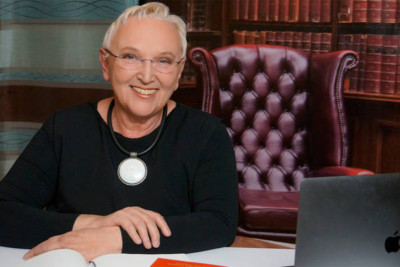
Theresia-Maria Wuttke

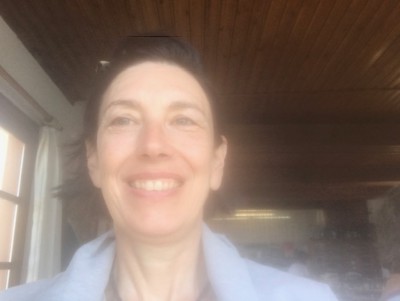
Ute Weber
RESOURCEN
THERESIA-MARIA & MONIA
Besuche unsre andren Webseiten
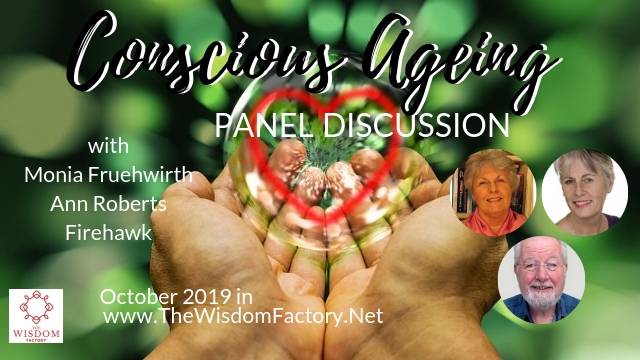
Conscious Ageing Panel Discussion

SEASON 6 EPISODE 4
Conscious Ageing – a panel with Ann Roberts, Monia Fruehwirth and Firehawk

HEIDI´S INTRO
The CONSCIOUS AGEING series was the result of Mark’s realisation that he might have other 20-30 years to live. He didn’t feel like doing the classical life of a person in retirement, he was inspired to know more about how other people dealt with the “third act” in their lives.
In 2014 we started the live broadcasts of the Wisdom Factory, first about topics around integral theory and practice, and from 2016 especially on “Conscious Ageing”. Mark, for the first time in his life had stepped up on the stage of the second Integral European Conference and presented his insights of how we age, up the spiral.
We did 4 seasons together, the fifth in spring 2019 I did alone in honour of Mark’s passing in June 2018. I had taken the commitment to continue with the work which was at Mark’s heart, and now, with season #6, I am happy to welcome more contributors, some of which have already appeared in the Wisdom Factory.
How to age consciously – this is the topic of our panel discussion. And how can we support others in this quest.
Panel Conscious Ageing 2019
0:00 Heidi Intro
1:58 Firehawk: a man among women. His spiritual journey. About his collaboration with Ann in the attempt to bring people together to become more fully human
4:30 Monia Fruehwirth. Her life and spiritual journey. Gerotranscendence, in Vienna. “Listening society”.
6:33 Ann Roberts. About meeting Firehawk and the body of teachings of “Earth Wisdom” which made her feeling home. A passion for consciousness, Ken Wilber’s work, Tom Christensen and Spiral Dynamics. The listening society and the daily evolver. Active wisdom: explore this period in our lives
9:45 Heidi: How she decided to continue the series Conscious Ageing.. Getting married, having children and ageing: You are expected to know how that works, no preparation normally available.
12:00 How do we age consciously? >> Firehawk: consciousness from mid-30ies: A lasting difference of what you do for the world? >> deep dive into consciousness and possibility of relatedness. The woner of finding consciousness! Understanding his own elderhood AND how reconnecting our elderhood with younger generations? Seeing, knowing, challenging each other.
17:50 Ann: How do indegenous culture see consciousness. An unbroken tradition of the teaching, from 1996 she feels opening up her understanding, embrace complexity, stages of development. “The cosmic Hologram” by Jude Currivan: consciousness creates matter. Information is on the center of creation.
20:55 Much research about ageing is about loss. Ann is interested in the time between leaving work and very old age where we can move out into life. Conscious ageing: dance of awareness, deliberateness, commitment to make the most of it.
22>:06 Monia: She found the maps of wilber around 2000. She became aware of ageing when she noticed that she was mostly the oldest, doing strange things (like Samadi tank and conversation groups). Not the typical grandmother. Trying to be an authentic person, reliable. Children development can be enjoyed by grandfather, what he couldn’t do previously. Book: Raymond Fismer “Ein ganzer Mann”. Include the feminine side.
26:02 Consciousness is creating reality. A creator of what is missing. How do you get together being in 21st century and Earth wisdom? What language do you use?
27:30 HO. “I have heard you” > Ann: during business life: she had the map in her consciousness, without too much declare it openly. After retirement she would be explicit about the teaching. The language? – speak to the listening of the other. Simulcasting = speaking to different levels.
30:02 Firehawk: what if we held the digital space like Zoom as sacred as the earth? The planet has created whole and complete structures. Today: not an either-or. Touching the sacred today. Creating the WE. Dance with 21st century and honoring the previous ones.
33:12 Monia. We-space for women. One living consciousness. What language to use in a we-space and how it is different from every day language
35:30 Heidi: a technological form of telepathy. Maybe a pre-stage of rediscovering it. The theory of everything and the akashic field by Erwin Lazlo. I need to understand, things need to make sense. Maybe in this part of our life we can come to these new views of the world.
38:15 Firehawk Understanding by language. Here the conversation is more nurishing than any power-point, laid out stuff. This space allows listening. Elderhood has the promise for the change of consciousness.
40:45 Heidi: the co-creative space: putting pieces of the puzzle together.
41:40 Ann: Her transition after work life with Mary Catherine Bateson. An Active Wisdom Wheel (see also the first conversation) “My well being”
43:25 Healing of personal and collective dramas. “My development” Steven jenkison: “Come to age”/ Charles Eisenstein: Living between 2 stories.
45:50 The north: “My vocation”. Barbara Mark-Hubbard: Vocational arousal, super-sex for co-creation, meaningful action in the world. The deepest heart’s desire. Simon Senex: “Start with why”
48:55 The east: the completing place, the freedom for new adventure. Why am I here? Manifestation in co-creative projects. An expanded time to be and listen. Reconnection to the Earth wisdom, freedom as opposed to fill the days with medical prescriptions and worries. We are sacred human beings, we are whole, so contrary to what we were taught, which was mostly critical.
53;07 Heidi about Dementia, integrally seen, by Bettina WIchers
53:40 Monia about freedom. What is freedom? Again suggestion of the book “The listening society”: free FOR something.
55:39 Speak across, bridging the gap. Monia about her peer group trying to find a language to speak with red. Who talks to you from what level? An example. You cannot talk on “green” to a “red” person. We-space allows intuition to arise.
58:28 Firehawk: appreciation for the conversation. A story about an eskimo. Asking questions instead of being told what to do. Listening for the question to ask.
1:00:30 Heidi: bringing people together. Thank you.
1:01:55 Ann enjoyed the integral conversation. She feels Mark’s legacy, where we are sitting now.
1:03:40 The next course with Ann and Firehawk webpage.
November- dreaming time in winter time.
.
CLICK ON THE LINKS BELOW FOR THE BOOKS RECOMMENDED
Ulrike Hofmann-Schüll: Älter werden

SEASON 6 EPISODE 3
September 2019
Ich werde gerne älter – mit Ulrike Hofmann Schüll


HEIDI´S INTRO
Ich werde gerne älter?
Als Kinder wollten wir immer so schnell wie möglich älter werden. Das Gute schien immer in der Zukunft zu liegen: “wenn ich groß bin, dann…”. Für die meisten Menschen ändert sich das,
wenn sie 30 werden, spätestens dann mit 40. Dann beginnen sie, sich Fragen zu stellen über den Sinn dessen, was sie gerade tun, ob sie nicht lieber doch etwas anderes hätten tun sollen, wie si die Zeit besser nutzen könnten usw. Denn die Zeit scheint sich zu verändern. Plötzlich ist sie nicht mehr unbegrenzt, und manchmal beschleicht uns schon da die Ahnung, das wir vielleicht nicht ewig so weiterleben könnten wie bisher. “Midlifecrisis” wird das genannt, wie eine Krankheit, die schon wieder vorüber gehen wird.
Aber von da möchten die meisten Menschen nicht mehr älter werden. Wir Frauen beginnen die Haare zu färben und die Kosmetikindustrie zu fördern, weil uns versprochen wird, dass wir keine Falten im Gesicht bekommen, wenn wir nur genug von all den Cremchens kaufen. Jung bleiben um jeden Presi, oder zumindest jung aussehen – und das ist ja nicht unbedingt dasselbe.
Ulrike Hofman-Schöll, der Gast im Interview dieser Woche hat beides verwirklicht: sie sieht jung aus und sie ist es auch, trotz ihres Geburtsdatums. Sie wollte immer älter werden, als Kind, in der Mitte des Lebens und jetzt. Oder man kann auch sagen, dass sie die Gaben des Älterwerdens in jedem Alter geschätzt hat und noch schätzt. Sie hatte ihr Leben lang einen offenen und kreativen Mind, sie konnte Körper, Geist und Seele gut in Verbindung halten und sie ist beständig neugierig darauf, was Ihr das Leben sonst noch bringen wird.
Ulrike ist eine gute Inspiration für alle, die dem Älterwerden und dem Alter eher skeptisch gegenüber stehen. In unserem Gespräch erzählt sie, wie sie immer neue Begabungen und Fähigkeiten entdeckt und ausgebaut hat, wie auch ihr “Rezept”, dem Älterwerden furchtlos in die Augen zu blicken. Viel Spass beim Zuhören.
ÜBER ULRIKE HOFMANN-SCHÜLL
Ulrike war bereits in der Wisdom Factory vertreten mit einem Gespräch auf Englisch, über das Leben als kreativem Prozess. Besuche diese Seite, um mehr von über sie und ihre Arbeit zu erfahren.
0:00 Intro Heidi
1:00 Ulrike stellt sich vor: Immer neue Ideen, ein erfülltes Leben
2:10 Geschichte aus ihrer Kindheit, vom Schulanfang und überwundener Krankheit: eine kluge Frau werden! Was passierte, war goldrichtig
5:15 Auch schwere Erfahrungen bringen positive Einsichten und Erfahrungen. SIch nicht zu genaue Vorstellungen von der Zukunft machen.
/:05 weitere Beispiele: ihr Entschluss, nicht zu studieren, was sie gar nicht sagen wollte. Die Ablehnung durch die anderen, hat sie in ihrem Beschluß bestärkt, Goldschmieding zu werden, das was sie machen wollte.
9:05 Als Unstetigkeit betrachtet, wo es ihr nicht lag. Zu dem kommen, was man machen will, auch ohne Unterstützung. Mit Auseinandersetzung und Herausforderung kann man zur Sicherheit kommen.
12:00 Der Tanz durchs Leben und Kleidung durch Farben, eigener Stil, nicht, wie es der Mutter gepasst hätte. Eine wissenschaftliche Untersuchung: das tun, was sie als 20jährige taten: das biologische Alter , 10 Jahre jünger. Ulrike fühlt sich bestätigt.
14:50 Kinderwünsche zu verwirklichen hält sie jung. Lange Haare und Hund.
16:20 Was heißt “alt sein”? Wir fühlen uns als jung, andre sehen uns alt. Die Männer auf der Tagung:
18:10 Altersbonus?. Erfahrung von Ulrike mit Jüngeren. Natürliche Autorität.
19:45 größeres Selbstvertrauen gewonnen durch das Organisieren von größerem Heilertreffen. Bei sich gelandet, trotz Verantwortung und Stress, dadurch, dass sie das geschafft hatte.
22:30: Man kann viel mehr, als man denkt, man muß es nur ausprobieren. Heidi’s Weg zur Gesangslehrerin. Man braucht Herausforderung, um wachsen zu können. In jeder Altersstufe. Nichts-tun ist sehr schlecht, wenn man glücklich sein will.
25:00 Über das Heilertreffen, das Ulrike organisieren “musste”. Das ende der Schülerschaft. In die Rolle gegangen, für die Gemeinschaft zu arbeiten. Ein Initiationsprozess. Älterwerden = man hat wieder eine Stufe genommen. Bestimmte Abschnitte sind vorbei.
38:35 Würde, die der Mensch für sich erobern muss. “In Würde altern”. Die Dinge, die sie getan hat, haben ihr Würde gegeben. Hat das mit dem Körper zu tun und Körperhaltung?
32:10 Entschuldigungen mit “Alter” ist nicht gut. Langsamer vielleicht, aber auch sorgfältiger. Reframing von Verlust zu Gewinn.
33:25 Heidi Geschichte: was willst du denn, in Deinem Alter!) Ulrike: eine Geschichte von 2 Frauen in einer Stammeskultur, die zurückgelassen wurden und dann den Stamm gerettet haben. Beenden von nicht-lebenswertem Leben?
36:40 Auch im Alter kann ich etwas tun, was für die Umgebung lebensnotwendig ist.
37:40 Wie auf das Alter vorbereiten? Viele alte Leute vergiften sich durch zu viele Medikamente, auch durch schlechterem Stoffwechsel. Tipp: viel atmen, intensiv, Hecheln, damit der Sauerstoff ins Blut kommt. Entzündliche Prozesse verhindern: Honig + Curcuma, antibakteriell.
42:20 Darmprobleme und Curcuma? Keine Verschreibung, selber die Dosierung ausprobieren.
44:00 Was man vorbeugend tun kann. Auch Singen, keine Angst beim Tönen, Obertonsingen. Buch: “Die Entschlüsselung des Alters” (Elizabeth Blackburn) Über die Telomere, biologisches Alter. Kreativität hält Telomere fit. Verbindung mit allem. Hinspüren in die Verbundenheit.
49:30 Ulrike’s Beispiel dieser Erfahrung, Kraft und Einsicht. Tiere sind wichtig, Streicheln. Tiere in Gefängnissen. Heidis Beispiel mit einem schwererziehbaren Kind.
51:25 Waisenkinder im Altersheim. Wahl-Oma. Zusammenfinden der Generationen, was kann man tun? Mehrgenerationenhäuser, aber Krankenkassen zahlen nicht für private Projekte wie Alten-WGs. Wir müssen auch politisch aktiv werden. “Ältere Menschen, vereinigt Euch!”, das gilt für ALLE, es nicht den Politikern überlassen. Uns treffen!
55:25 Heidis Geschichte über den Entwicklungsgang ihrer Mutter. Weitermachen hält uns am Leben! Nicht aufgeben, auch wenn es manchmal schwierig ist.
57:20 Ulrike ermutigt, sich Gesellschaft von Menschen zu suchen, die im eigenen biologischen Alter sind. Anregungen erhalten, kein traditionelles Rentnerdasein führen.
59:00 Ulrike ist inspiriert, selbst Videos und Gespräche über Heilung zu führen, dank dieser aktuellen Erfahrung
1:00:20 Conscious Ageing – Älterwerden ist schön. Ulrike fragt die Zuschauer nach Feedback und Vorschläge. Bitte Hier schreiben oder sich direkt an Ulrike wenden auf www.tiger-gold.de
AUTHOR RESOURCES
Ulrike’s Webseite www.tiger-gold.de
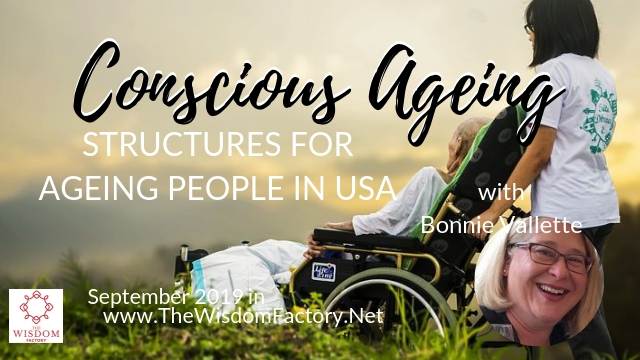
Structures for the third half of life in the US with Bonnie Vallette

SEASON 6 EPISODE
September 11th 2019
Structures for the third half of life in the US with Bonnie Vallette
HEIDI´S INTRO
When we are young, we are not very interested in thinking about old age and how we will be able to live then. We postpone the topic until we are getting nearer and nearer and the thoughts appear: what can I do when…? Who will take care of me, if I can’t do anymore xyz? And when we enter into retirement, we are confronted with the reality that the money we get as a pension probably won’t take us very far.
Unless we had a really good job and paid a lot into the pension fonds, we will realise that it is difficult to keep up the usual life style. Old people living near poverty has become almost normal in the last few decades, and it will get even more “normal” for future generations who live in total insecurity regarding jobs and social security already. Who will take care fo the old people who have no family able to take care for them?
The question is answered differently in the different countries of the world. The lack of funding seems to be an all pervasive phenomenon. Old people are no investment, in a capitalist society they are worthless and left to the compassion of private people and, yes, the churches. Thanks God we haven’t demolished them yet, totally, by means of the increasing atheism in the world. They have an important function and we better recognise that in time!
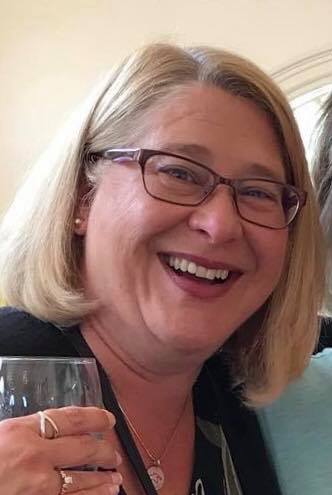
Our guest this week, Bonnie Vallette, got interested in the topic eldercare long before she reached the interested age herself. She is very active in trying to create a better situation for the older population, at least in her community. In our conversation she explains how the systems work in the US, especially in her area, and what she is doing and initiating to better the life of those who, at the end of their life times, are unable to fight for themselves. If you have questions how you can collaborate, or just, where to go when you have specific problems, do contact Bonnie:email: BMLVallette@netscape.net Phone: 1.614.226.7247.
ABOUT BONNIE VALLETTE
Bonnie Vallette is a generalist, weaver, and networker. She brings people and ideas together in new ways – using concepts like disagreeing in love and polarity management, in community building and igniting culture change, and by utilizing skills learned in Eldercare (Person-Centered, Hospice, and Trauma-Informed Care) and the Authentic Relating and Integral movements, all to help facilitate and deepen difficult discussions with an eye toward win-win resolutions. Discovering Spiral Dynamics gave her a map to hold diverse interests and lean into her gifts in new ways. Underpinning all Bonnie’s efforts are a lust for life-long learning, body- and breath-work, and daily meditation.
Bonnie has a Bachelor of Science in Business Administration with an emphasis in Marketing from The Ohio State University. She has worked in retail, business banking, as a church administrator, nonprofit fund development, and in Eldercare. Bonnie received her Level One SDi certification from Don Beck in Texas (Spring 2018), and Level Two SDi certification from Rica Viljoen in South Africa (Summer 2019).
0:00 Intro Heidi
0:50 Bonnie introduces herself, works in elder care, non-profit structures
2:22 Elders need to stay at home to get the maximum benefit of payment. Elders stay alone and they connect with them and help with everything.
4:12 Bonnie gives a historical overview of payments for elders etc. Before children could stay in the community and so the elders were connected with family. Medicate and medicare payed more than the actual cost of nursing homes. Now lower payout for nursing home and less staff. 10.000 people a day are retiring and enter into medicare which is not enough funded. Community action is required and important.
8:35 Who is in nursing homes. Assisted living. People need to provide their own money. Savings of 5000$ or less: they can supply for medicate which they can keep, not needing to use their private money to pay for care. They are even less supported and nursing homes take only limited numbers of these.
11:55 The work of Bonnie WFCA: senior centers, services, affordable services, Her goal: insure mechanisms in place that elders are helped to resolve their dilemma.
14:15 Funding. Hopefully churches, volunteers, foundations
15:40 Younger people work for free and they get the support back when they need it? “Kindness” initiative: college students for their volunteer hours, also church members. “The circle of caring” Heidi’s ideas of mutual support
17:55 App for community service hours. – the future of care? Agencies for Aging for people who are completely alone. You can become an advocate for them.
20:00 Heidi on the system in Germany.
21:20 Heidi on “Reinventing organisations” by Frederick Laloux Nursing differently organised in the Netherlands. When will we take over such a successful model
24:15 Bonnie on leadership. Eden philosophy: People who are doing the direct care know best, start to be empowered and speak to the leadership in the care facilities. Flatening of hierarchy is important, as well as non-prifit model. All stakeholders need to be included.
56:50 People in direct care are normally not heard in the hierarchical system. We need to set the system upside down.
27:50 People taking care privately for family members are left out and without money when the cared for person dies. If you haven’t payed into the system you get no pension. Also in America! Examples.
31:10 Childcare, yes.- elder care: where is it? What do we need to do to change that? In next 5 years there will be more people over 60 than under 17. Is it fear of getting old oneself to push the topic far away? Also that families are not together anymore. Grandparents for hire?
34:00 Learning from each other. We want to share our understanding and learning, often younger ones don’t ask but prefer to re-invent the wheel and make the same mistakes again.
35:45 Is their the tendency of generations coming back togather? Share the rooms of college students and nursing homes as an option. Both benefit greatly.
37:10 “Integral sageing” in Bolder and on Facebook. Bonnie about Integral and Spiral Dynamics . Appreciation for the quadrants which gives us a better way to work through the issues. Inner leadership aspect: Resources help to find out about and gain clarity oneself before going into the group. Examples.
40:40 Planning of the group? Facilitative leadership for networks. Integral sageing as a good way to find out inside what is going on, dealing with our angst, getting clear about own focus and becoming compassionate with people on their own journey.
43:25 Fear of dying? Bonnie: educating caregivers “Trauma informed care” – traumas come often up before dying. Caregiver is confronted with finding out the need of the person: mostly talk and touch. Examples. 100 questions of the “Trauma informed care” Difficulty for the family to del with the trauma expressions of people. You need also selfcare, but leaving and send those people away is not really nice. We need to change our culture to see and handle challenging situations.
50:25 Bonnie’s story: how the father handles the great depression. Mum wouldn’t speak about her difficulty. When elders can speak about ntheir dramas the suffering of the world could be alleviated. Talking about the pain can help! Tell your life story!
Heidi talks about the story of Frank Magwegwe we listened to in South Africa. Caritas Uwizera, her survivng the genocide in Rwanda. Listening to the story of others let you understand that you are not alone. Telling ones story inspires others.
54:30 “The Elderly Listening Club”. Tell your story, connect with us. Conscious Ageing series 6
DOCUMENTED LINKS:
Centers for Medicare & Medicaid: https://www.cms.gov/
Central Ohio Area Agency on Aging: http://www.coaaa.org/ (see especially the Volunteer Guardian Program)
Reinventing Organizations: https://www.reinventingorganizations.com/ with access to research links: http://www.reinventingorganizationswiki.com/Main_Page
Great Britain now has a minister of loneliness: https://www.smithsonianmag.com/smart-news/minister-loneliness-appointed-united-kingdom-180967883/
Servant Leadership: https://www.forbes.com/sites/forbescoachescouncil/2017/07/19/servant-leadership-how-to-put-your-people-before-yourself/#16d8596766bc
Eden Alternative (Elder-Centered Care model): https://www.edenalt.org/
Thriveability: https://www.linkedin.com/pulse/sustainability-dead-long-live-thriveability-olivier-giraud/
Eldercare stipend for family members offering care: https://www.consumerreports.org/elder-care/how-to-get-compensation-when-caring-for-aging-parents/
College students living in Eldercare residences: https://www.aarp.org/livable-communities/housing/info-2019/student-housing-retirees.html
Integral Sageing in Boulder, Colorado, USA: www.facebook.com/groups/integral-sageing
Integral movement: https://integrallife.com/what-is-the-integral-movement/
Spiral Dynamics Integral: http://spiraldynamicsintegral.nl/en/
The Churning: Inner Leadership: http://www.finnjackson.com/books/the-churning/
Getting comfortable with death early in life: https://deathcafe.com/
Hospice & Palliative Care: https://fairhopehospice.org/
Trauma Informed Care: http://www.traumainformedcareproject.org/
Adverse Childhood Experiences test: https://www.cdc.gov/violenceprevention/childabuseandneglect/acestudy/index.html
Article: Millennials The New Caregivers
Heidi and Mark with Ashton Applewhite, leading activist against ageism
Heidi in conversation with Rica Viljoen
Ann Roberts – an inquiry into elderhood

SEASON 6 EPISODE 1
September 4th 2019
Active Wisdom: An inquiry into elderhood

WITH ANN ROBERTS
After retirement – Ann calls it “refirement” – she went back to University. For her Masters in Applied Social Science she interviewed grandparents about the flow of love across the generations. The insight and learning she gained has led her to be actively engaged in an inquiry, with others, into Elderhood.
ACTIVE WISDOM is the term that applies to her work which aims to create a community of people who are curious about their Elderhood and wish to inquire this new stage in their lives.
HEIDI´S INTRO
We are kicking off season 6 of CONSCIOUS AGEING with Ann Roberts who already, 2 years ago, had inspired us with her life story and her work in ACTIVE WISDOM. Yes, once upon a time, old people were considered and appreciated for the wisdom they had gathered through their long life time. Today, their wisdom seems to be somehow unacknowledged or rejected by a hyper active youth culture. Young is good, old is bad. So instead of learning from other peoples’ experience and instead of learning from history, the wheel gets invented anew again and again and the same mistakes are made over and over.
If elders have no natural place of respect and appreciation in our societies, what to do? Our generation of Babyboomers is experienced in having new ideas and of not accepting societal norms which would put them into the corner of drawing back and be silent. If nobody asks us for our wisdom, we need to step up ourselves and offer it in an appropriate way. As elders, we can use this position to wisely offer our knowledge to the younger generations to give them the trusted help they may need to get oriented in a confusing world. Listening to them and gently guiding them would be the future task of elders who have developed themselves into mature human beings.
This time we are talking about her project of creating a network of people to inquire into elderhood. She starts with a couple of colleagues and offers a 3 months course, a place where people meet live on video and explore together important questions about elderhood. It is not about giving advice or selling solutions. It is about digging deep into the challenges and possibilities which arise when getting older.
ABOUT ANN ROBERTS
ABOUT ANN ROBERTS
After a 30 years career in organisational, team and personal development Ann ‘retired’ from Police Scotland in 2015 from her role as a Leadership Development Consultant.
As she prepared to leave, she realised there was more she wanted to achieve, and so the following September she undertook a Masters in Applied Social Research. She enjoyed the experience, particularly being with young people who helped her find her way in 21st Century academia.
At that time, Ann and her husband had three frail parents in their 90’s, adult children in their 20’s/30’s as well as a growing number of grandchildren. It was challenging time for Ann as she experienced the stretch that many of the baby boomer generation have in supporting different generation at the same time as well as her studies.
Ann’s research led her to the work of Mary Catherine Bateson who proposed a new stage in Erik Erikson’s adult psychosocial development model that she called “Active Wisdom”. This new stage sits between the Erikson’s original mid-life time of Generativity and that of Old Age. This new stage arises due to the healthy longevity that many of Ann’s generation now enjoy.
Mary Catherine describes the “virtue” of Active Wisdom as being about sharing insight gained from rich life experience, combined with new levels of experimenting, travel, study, and a refreshed interest in giving back to others. The “vulnerability” of this stage can be an attendant loss of identity that leads us to withdraw rather than whole-heartedly engage with new possibilities.
Finding this research was pivotal in helping Ann to understand this stage in her life and led to her passion to explore this concept in a new on-line programme called Active Wisdom: An Inquiry into Elderhood. Information on this new program can be found at http://bit.ly/AW4HOME
0:00 Intro Heidi: Active WIsdom: an inquiry into elderhood
1:02 Ann introduces herself, talking about “refirement”
1:40 Heidi’s comment on not needing to work for income
2:30 Heidi asks Ann about her present activities
3:09 How Ann felt after retirement: she found herself in the book: Mary Catherine Bateson: “Composing a further life”, a new stage after retirement “active wisdom” – post-work parenting phase.
5:20 Retirement and purpose of life
6:15 Ann: the “Sandwich generation”, people with ageing parents and children, even one generation more! Ann talks about how she got stressed by needing to take care for elderly people instead of the grandchildren. Dealing with many challenges.
8:32 “Elderhood” – Baby boomers: “Pig and python beneration”. A resourceful generation which has a lot to give back.
10:00 Ann talks about her activity around active wisdom: Linkedin group, Facebook group etc. A program of inquiry into elderhood. THe Series CONSCIOUS AGEING inspired her.
14:00 We need realism about ageing, not to be over-positively ignoring and neither be controlled by the symptoms. But don’t believe to your inner voice who wants to tell you that you are getting old and gets you into fear and depression. Body needs movement
16:25 Ann talks about their program: One module: How do I care for my wellbeing?
17:20 Women were educated to neglect themselves and care for others. Example: Heidi’s mother
18:25 Ann about her interviewees: they did conscious choices, difference between . grandmothers and grandfathers. Some created new initiatives and ways of being with the family.
21:25 Second step: “My development”, personal development as adventure in that age. W>hat do I know and can contribute? Where is your edge of learning? An inquiry in a co-creative space. 3. Module: My vocation. Vocational arousal (Barbara Marx Hubard).
25:20 Mark as an example, our story
28:00 Ann: enjoying what we are doing: Ann and her teaching partner: reaching out far and offering something which can make a difference. Technology is becoming easier and so it is accessible for most.
30:25 FInal piece “my freedom” . Virtue and vulnerability of the stage of Active Wisdom. Leaving a legacy. What was the gift of the life of mother, father, my country? BEing in community.
32:40 Connection via Internet. We are not alone! Mutual support and encouragement.
34:50 Ann: others bring new perspectives. Worry can change into more resourceful considerations.
35:50 Co-creation instead of fights. Asserting positions ask agreements and disagreements. Co-creative space is about asking questions and not uttering statements. We need rules of agreement to stay on purpose. Open to not knowing and new perspectives.
38:10 Heidi’s experience with co-creative spaces: listening is the key. The cisl happens when something new emerges. A different way of being together this way is nurturing and enlivening. Experiencing the field and listening and feeling, enjoying oneself. Be fully who you are, not holding back, not being too forward, or being too much holding back. A non-judgemental space.
43:05 Ann: the stringing of the beats: A circle of sharing, Speaking until you are complete, others listen and say “hoh” at the end. A protocol can hold the space, especially in online connection.
45:15 Heidi asks about the course. Ann explains the procedure of the course. It is all about relationship and questioning in relationship with others.
48:50 Heidi: younger people often want to re-invent the wheel: Do we more easily learn from each other? Ann: ask questions also to the young. They teach us much, so can we listen first?
50:20 We thought we knew. Now we know that we don’t know. Not needing to know everything.
51:21 Ann shares her experience with the young doctors when she was ill. Surrender to their expertise was scary. Finding the balance, still asking the questions: why do I need this injection? FInding the middle ground of the opposites = the wisdom. A broader perspective, no need for “black and white” = healthy elderhood. Right or wrong is about is it useful or not, no absolute truths. Finding the appropriate language to communicate what we know to the others.
55:10 We did a co-creative conversation! Appreciations
56:00 Website: Active Wisdom email: ann(at)ctew20.org


Leave A Comment