
The feminine perspective within the integral movement
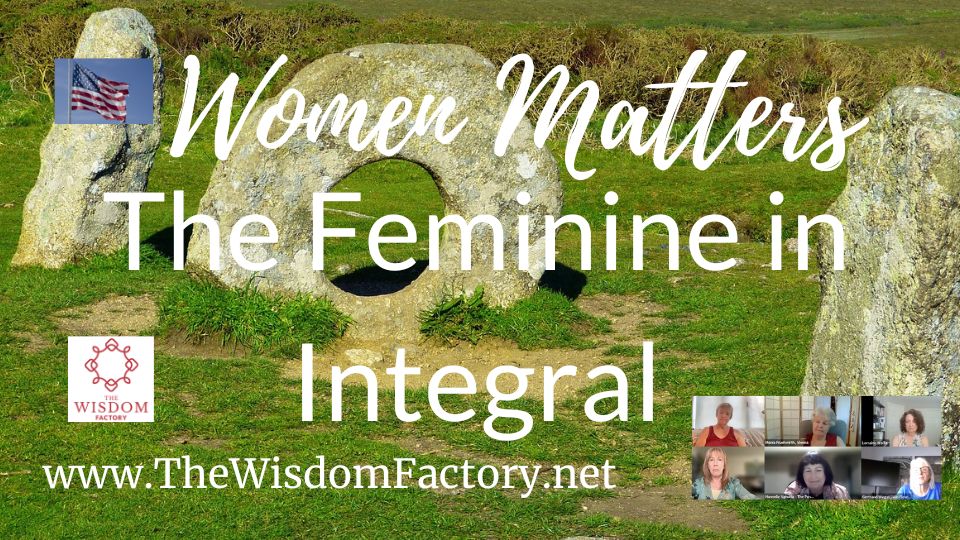
This is a deeper exploration of why this group formed and persists after nearly a decade. The dialogue focused on the unique feminine perspective within the predominantly male-oriented integral movement, examining themes of caregiving, connection, and feminine values that are often undervalued or unrecognized in society and culture.
The conversations took place in August, 2026
# Women Matters: Reflections on Feminine Roles, Connection, and Integral Community
## Summary
The Women Matters group convened for a brief check-in amid a sweltering August 2026, led by long-time members Mona, Gina, Christine, Lorraine, and others. The conversation began with personal updates on weather, family, and travel, transitioning into a deeper exploration of why the group formed and persists after nearly a decade. The dialogue focused on the unique feminine perspective within the predominantly male-oriented integral movement, examining themes of caregiving, connection, and feminine values that are often undervalued or unrecognized in society and culture.
Participants reflected on the historical and cultural roots of patriarchy, the challenges women face balancing societal expectations, self-worth, and family roles, and how these dynamics shape female identity today. They discussed the importance of creating safe feminine spaces for authentic connection and co-creative conversations, while also critiquing male-dominated narratives such as the “hero’s journey.” There was an expressed desire to articulate what a truly feminine contribution to the world might look like—one grounded in relational morality, care, and connection rather than competition or domination.
The group highlighted the evolving roles of men in caregiving, the different brain wiring between genders especially in empathy and moral reasoning, and the need for a balanced integration of masculine and feminine values for a harmonious society. Integral to the group’s existence is a shared commitment to nurturing female strength and resilience, creating a supportive community that fosters ongoing personal and collective growth despite cultural constraints.
## Highlights
– 🔥 Women Matters group has been meeting internationally for nearly a decade, maintaining a diverse and intimate community.
– 🌍 The integral movement is seen as male-dominated, inspiring the group to explore and redefine feminine roles and values.
– 👶 Feminine caregiving and relational morality are underappreciated but crucial forms of intelligence and leadership.
– 🧠 Brain differences play a role in how women and men connect and relate, influencing societal roles and expectations.
– 🔄 Balancing masculine and feminine energies is essential to address modern global crises and create sustainable futures.
– 🤝 Creating dedicated female spaces is vital for authentic dialogue, self-expression, and collective empowerment.
– 📚 Cultural reflections included referencing “The Gate to Women’s Country,” illustrating gender development and societal impact.
## Key Insights
– 🌿 **Feminine Values as a Healing Force:** Participants emphasized that feminine qualities such as empathy, relational morality, and caregiving offer crucial tools for healing and transforming society. These values prioritize connection and nurturing the vulnerable, contrasting with patriarchal emphases on rules, justice, and domination. This insight explains why the re-emergence of feminine perspectives is vital amid current meta-crises—the world needs balance, not one-sided dominance of masculine values.
– 🔄 **Integral Community’s Gender Imbalance:** The integral movement, while aiming for inclusivity and wholeness, is still largely male-driven in discourse and leadership. This creates a gap where women’s experiences and uniquely feminine worldviews are marginalized or insufficiently voiced. Women Matters serves a corrective by providing a forum to articulate these perspectives, encouraging self-definition beyond male templates like the “hero’s journey.”
– 👩👧👦 **Motherhood and Societal Valuation:** The group discussed how caregiving—particularly motherhood and child-rearing—remains socially undervalued and unpaid, despite its foundational role in society. Economic and political structures favor men’s careers and minimize the sacrifices mothers make, especially in pension impacts and professional interruption, highlighting systemic gender inequities.
– 🤔 **Challenges in Female Self-Worth and Identity:** Many women wrestle with defining their own values and identities beyond familial roles, as well as overcoming internalized patriarchal norms. The ongoing question, “What do we truly live for?” beyond reproduction, reflects a desire to articulate an independent female worldview that honors feminine strengths.
– 👥 **Neurological and Moral Differences:** Drawing on Carol Gilligan’s research, the discussion highlighted that women’s moral reasoning tends to focus on relationships, care, and exceptions rather than rigid rules and justice systems that dominate male perspectives. This difference shapes social behavior and conflict resolution, underscoring how women’s voices bring a needed complementarity to societal governance and ethical frameworks.
– 🤱 **Men’s Evolving Role in Caregiving:** There are promising signs of younger men embracing caregiving and emotional connection in ways previous generations did not. Retreats and group environments for men provide spaces to express authentic selves beyond societal roles. However, cultural conditioning still suppresses emotional openness in males, leading to loneliness and alienation. Encouraging balanced masculine-feminine dynamics is essential.
– 🌸 **Importance of Female-Only Spaces:** The women affirmed the value of women-only gatherings as “sacred spaces,” where authentic expression is possible without male oversight or judgment. These spaces serve as incubators for feminine dialogue, mutual support, and co-creative inquiry. By nurturing feminine energy collectively, women reinforce strength and resilience in a world often demanding conformity to male norms.
—
The Women Matters gathering offers a powerful model for sustained, transnational feminist dialogue within an integral framework. It highlights both ongoing challenges and hopeful evolutions—towards a world where feminine values are integrated and celebrated, contributing to a balanced, connected, and compassionate future.
00:00:02
Women Matters meet in August when it’s really really still hot everywhere. August 2026 and we do a short very short check-in and then we decided to start today with why we are doing women matters why we are meeting for so many years many of us it’s really a lot of years some came I knew it no but Mona and me for for instance and also Gatra we we are quite from the beginning and then Christine came and then Lorraine came and then Gina came and we had some other members in between. So the question why did you
00:00:43
come and why are you still here and before we do a short check in Mona do you want to speak from hot Vienna? Well, we have a heat wave in it really gets to me today. It’s I don’t know the it will won’t change tomorrow. Uh because in eastern Austria we have the panamic climate and the lake in the east is already drying out which it does regularly I’ve been told. So, it’s nothing to be excited about, but we’re still a little bored. And uh yeah, I don’t leave the house. I
00:01:26
stay inside as much as possible. And I cancelled my cleaning woman today because I didn’t want her to stop. And yeah, so that’s Vienna on August. What is it? August. My goodness, August 10th. So, I guess my cognitive abilities sort of deteriorate. Okay, I pass on to whoever feels fit to >> Right. >> Yeah. Here it’s 33. I just looked up Vienna was 35, 36. Uh yeah. So I’m kind of staying inside as well. And I should but I don’t move much. [laughter] >> Yeah. [clears throat]
00:02:36
>> Um I don’t have much to say. >> Okay. Except that my I think it’s the first time my three kids with all their families are together in Italy in one camping ground and they are having fun. All the five cousins. So >> in the heat in the heat. Yeah. >> Yeah. The water. I mean they are on in and on the water. Yeah. So nice pictures. Yeah. I I don’t have to say much. [laughter] >> Can you give us on to Christine? >> Um, good morning. I’m Christine from
00:03:20
Carlsb, California. I just looked it up. We’re at about 25 degrees C. >> Oh, cooler. >> 25. Yeah, it’s it’s pleasant. A little definitely more humid in the summer, so the humidity makes a difference. Um, and I’m excited because our daughter Alexis is coming home on Friday and she’ll be here for 10 days while she packs her stuff up and moves her stuff to Lincoln, Nebraska where she’s um getting the training as an air traffic controller. And so she’ll be here collecting her
00:03:56
stuff and you know, it’ll be really nice to see her. I haven’t seen her since April. >> So looking forward to spending time with her. Yeah. And that’s what I’m looking forward to. Um Lorraine and I have a little bridal thing going for a friend on Thursday this week. So looking forward to that. We’re somebody’s getting married and so we’re taking the bride out uh for a nice day. So that’ll be fun. And hopefully we’ll probably not talk about anything integral related. Right, Lorraine?
00:04:30
>> Absolutely not. There will be wine involved. So range, >> which means we’ll probably end up talking about politics. >> Yeah, >> I will pass to Lorraine. >> Yeah. Well, as I as I was mentioning before, I’m I’m having this is a new thing for me, these allergy attacks. And so, I’m not I don’t even know what kind of medication I’m supposed to take cuz it’s so new. So, I’ll figure that out. But um [clears throat] yeah, and I’m also getting ready for
00:05:06
that trip to Europe. Um as it turns out, uh Heidi, we are leaving early morning on the 21st. So I really thought about coming to your celebration. I would love to do that, but I think it would just be a little bit too much. And um you know I I love v going to Europe. I’ve been frequently in recent years, but it’s so crowded now, especially in France. Um it’s overwhelming. I mean, you have to book everything ahead of time, including trains, and so it’s been stressful, too. And then you get to Paris and it’s
00:05:53
jammed. There’s just too many people there. So, I’m looking forward to it, but I’m also dreading all the travel connections and stuff like that. Um, but otherwise, it’s it’s been a pretty um, you know, calm period. >> So, I would really like and love if you could come and hear. It’s absolutely quiet and not >> Yeah. Huh. [laughter and gasps] We met yesterday in the lake and it it was Sunday and it’s almost nobody there. It’s it’s astonishing, you know. We found parking
00:06:30
spaces and everything >> and in a bar, wonderful ice cream on the lakesides or, you know, if you want to flee the jammed Paris, you can. [laughter] >> Yeah, I I can >> Huh. I can attest that uh Heidi’s uh retreat uh Paradisio in Tigra is lovely and you don’t have to plan a lot of stuff. I mean I I I think you can just be spontaneous. It’s not like >> just getting there and then getting back to Charles de Gaulle for my flight. >> You know I So I’ve only got a day and a
00:07:09
half to play with there. So >> I don’t know. I’m getting a little old for all the minations, but I, you know, I haven’t ruled it out entirely, but I will email you just in case. So, thank you for the invite. [snorts] Uh, Gina, >> uh, morning. Uh, it’s we’re having a bit of a misty day. So, over San Islands, which is America, it’s quite smoky. We’ve had a lot of smoke. uh uh our whole province is in a state of emergency because of the fires uh but also we share proximity with Washington
00:07:46
state so we’re getting a lot of smoke from there too but somehow in our boat we went away for the weekend and where we took the boat we were just sort of protected mostly from it just to the air currents so we had a lovely couple of days on the boat and uh now it’s back to school and back to reality and I’ll have to leave and just I’ll have to take a short break at one point just because I have a kiche in the oven cuz I have lunch guests. But uh all is well. We’ll just say all is well and
00:08:14
connecting with family in the past week because uh one of my cousins was is a snowbird which is the aeronautical display group and he was flying. So it all the cousins started communicating across Canada with each other just having this wonderful update. So it’s been very family oriented week. >> Yeah. And it’s it’s only 18 degrees here, but we’re going up to whopping 25 >> on the water. >> We have almost 40 for quite a while and still quite a while. But, you know, you
00:08:45
get used to it in my opinion. So, I’m not even too much in favor of air conditioning because then it’s always the change from cold to warm, cold to warm and the body doesn’t know what to do. So I mean you sweat in summer and that’s what summer is about you know in my opinion but we we make it. So for me update um yeah we have quite a good time uh we start to with Marcus we start to plan what we want to do uh here and how to do the the celebration and things like that and how we will organize the
00:09:24
life. So slowly we enter into some normality let’s say and in the meantime today I and tomorrow I will make fake jam and things like that and that’s always nice and yeah nothing else to important to say and I we suggested Mona suggested yes to talk about lines and development and also about how we would uh talk together co-creative uh conversations. But then came the idea to ask how long do we do women matters now? I think at least eight years if not 10 and uh 10. Okay. And so the question why do we do
00:10:14
that and why did you come uh join us and why are you still coming you know because even last time we were a lot of people and I’m astonished that we succeed to go on in this uh number and I really would like to take care for that we don’t get elen elenated b I don’t know the the name and so that we maintain the quality of our being together. No, that was >> alienated. It’s hard to say because it doesn’t look like it’s spelled alienated. >> Yeah, >> English is crazy.
00:10:49
>> I try to learn English here with Marcus, but it’s it’s hard, you know. >> So, I think we start with this and then when we are even more people and everyone is around, we will talk about how we would like to organize um our meetings in the future. Okay. So Muna, would you like to start? Why did you be have you been quite from the beginning uh part of this group and you are in the German group normally and why would we do an English uh >> group also you know? >> Well to me
00:11:29
the cultural background is very interesting of everybody and we differ quite a lot. Uh and that’s nevertheless we try to tune into the other person and get to the essence of what she says. Um so to me co-creative conversations in English which is not my mother’s language but it’s which is my mother’s uh actually we’ve been nine years in New York so it should be but I keep forgetting vocabulary and yeah anyway um co-creative communication in English and regarding the various backgrounds of
00:12:35
everybody is a challenge and you have to listen very closely. Uh, for example, I was thinking about Tina and the ravaging wildfires and I sort of got worried what will happen to her. But on the other hand, uh, it’s far away and um, so I’m glad to hear from you what it’s like. Um yeah, but I definitely would like to hear why you came uh why you joined and why you stayed with me just whoever would like to start. Um, I started I’m not sure after 2018 because I think we visited you and Mark in 2018
00:13:35
and um I think I started women women with women’s matters after that and I am here because Heidi invited me. [laughter] Pretty simple. Um, but I keep coming back because, you know, there’s interesting topics. I also like the fact that it’s international and hearing about other parts of the world. Miss Hannily being here, hearing about uh South Africa. Um, yeah, that’s always interesting. And, you know, sometimes the topics are things that I’m curious about and sometimes they’re not,
00:14:11
but it’s a mix. Um, I do kind of like us to have a little bit of a topic so that we are all talking about the same things rather than just random. But, uh, yeah, I’m I’m just interested in what women have to say. Um, and I think I mentioned maybe timonia that I’m trying to practice, you know, inner subjectivity skills of trying to be more transparent and listening better and hearing what people say and then responding to that. I’m I’m trying to hone in on some of those skills.
00:14:50
Okay. And I will pass on to Gina. I was just thinking hone your skills after being a psychologist listened for a living. It must be very different. Um so I too was invited by Heidi. Uh I am intrigued by uh women having these conversations because uh in my life I say that there’s not many women that will have an intellectual conversation with me. It’s usually about problems and even though we could discuss problems here, I just enjoy the international aspect as well and women who are my age
00:15:28
and older is also helpful because you know I’ve lost I’ve lost a lot of my friends who are older than me. Um and I just feel I just feel that this is a very comfortable group and withh I don’t know women have I think have to somehow hold their strength uh especially in this world and I think that even if we hold it on a one one person basis at a time I think together it helps us stay strong. So I’m just trying to hold the female energy here. Yeah that’s it for me. So how about you
00:16:00
gild? You’ve been around longer than me. Yeah, actually it came out of a big um appreciative inquiry process we did in 2016 in uh Shuok in uh in the intergal conference and we had um this was also an international group. I knew from um the teal movement. Um and yeah, we we thought how could we do that? Um we called it unity and diversity. And um out of this this was so we did interviews online and then the middle part we did in uh onsite in um in uh shaok and afterwards so it’s like the the um
00:17:12
the discovery and then the dis the dream and design we we did in uh in Hungary and we had a wonderful picture. Do you still have it? Uh Adelide Adidas [laughter] was looking on. Um yeah, so 20 people uh painting together without any agenda. It was just out of the streaming. And um and then we said okay let’s do that afterwards and online to to look the uh destiny is called um this phase is called destiny. It means like what do we do now in the real world with it? And there were many people involved. I think 60 alto together. And
00:18:12
it was a kind of a there was a bridge from the first interview to to the last meeting. um with people involved that didn’t know each other that um were just in the first phase and then others in the last phase. So it wasn’t really like a very big experiment and it worked. There were several groups coming out of this like the the what do you call this scient the the research like participating research. I I don’t know the name anymore, but there were Danish people that that were uh on the
00:18:58
lead. And then there was Tammy, Heidi, and me who said, “Let’s do something for women.” We didn’t have a name yet. And and then especially Heidi invited other people. she knew other women she knew. And so we started it not even really knowing what we would talk about and how long. So we had an open end and that was in um yeah fall 2016. And um Tammy was very much part of the journey at the beginning till she moved to Netherlands and got married. [laughter] [clears throat] Um >> yeah.
00:19:52
>> Yeah. So I have sometimes I still have contact with her but this was like let’s see what we can do. And I was here too. No. And we came out of also Hani and Tammy out of a group with a guy I’ve forgotten his name. He did regular once a week meetings Fuji or something. I’ve forgotten. >> Anyway, >> there was another group that >> it was another and then we came together and then with you and then we we created this out of that. Yeah. >> Yeah. So, so that was
00:20:32
created out of this process and I think this is the longest group out of this. >> I don’t know if the research people still so there were three four groups starting but uh I lost track and uh why I’m still here it’s because of you. I almost said guys but you’re not girls. So, it’s not, of course, I like to talk about a topic, but it’s that is not the main thing. If it weren’t you just for the topic, I wouldn’t come. >> I have enough people to talk to and I’m
00:21:21
busy enough to learn new stuff, for example. Yeah. So yeah, and I’m I’m really happy and I think this is yeah to reinvent ourselves over and over. So it’s not like okay we are going to do this for the next 20 years. It’s just okay let’s look like now why are we here? What why are we still here? [laughter] Why would we still be here in 10 years? >> Yeah. >> Yeah. So, I’m very happy to that this was a so longlasting thing out of >> and also with Christine. No, it’s quite
00:22:11
a long time. It’s eight years then. And you bought over Lorraine a few years ago. Yeah. And it was I think with everybody coming into the groom group there is some new wind coming up some new uh initiative to and I like it when there is a new person a new perspective coming uh out of nowhere in some way [laughter] and [snorts] that is why I like it uh to to have contact with people. First I was fascinated about the four continents we had or at least three and um being able with technology to
00:22:53
meet and then this creating connection despite some of you I don’t know like Lorine I don’t know you I know all the others but it doesn’t really make a difference it is like if we knew each other for a long time. So that is my uh take on this and I am ready to continue and try to keep the how do you say the the the room keep the the space and as long as you come and we are openly talking about what we want and what we don’t want then uh I think we we could have a future. Loren, you you are the not the baby but
00:23:41
almost [laughter] together >> like like you said Christine invited me >> and um you know I I had no plan for what I wanted to get out of it. Certainly the international um nature of it was very appealing. Um, I found myself feeling very grateful that those of you for whom English is not your native language are willing to do this in English. I think that’s a great gift because there is no way I could do this in another language, any language. Um, so I’m very appreciative of that and
00:24:24
uh um kind of impressed by it. But when I think about it, and you’re forcing me to think about it more deeply, um, I find the whole integral movement to be, and I’ve said this before, very male dominated and male oriented. And I guess part of me was curious about, well, what would women do? I mean, one inclination is to follow the path that men take, which is always the hero’s journey. If I hear about that one more time, I’m going to spit. Um, you know, we don’t live our lives planning
00:25:05
to be heroic. It’s that’s not our that’s not our thing. Uh, our brains are different. Our bodies are different. Our, you know, evolutionary heritage is different. But I’d love to get clearer on what we’re here for. and especially in this integral community because it bothers me that it’s so masculine and I’m not terribly impressed with Ken Wilbur’s emotional development and it’s it’s a concern sometimes that is such a guru to so many people especially young men.
00:25:47
Um, so I know I’m I’m tapping into anger now, you know, which I’ve this is what I’ve carried with me all my life that damn it, you know, I’m a woman and where is my place? And, you know, most of my generation, we grew up adopting the male thing. You know, we try to advance ourselves. We do, we work, we, you know, we were living in this patriarchal world and we adapted. But, but there’s more to being a woman than that. Um, and you know, I’m though I was preoccupied by it in at
00:26:35
different times in my life, I don’t think that I’ve really gotten clear on exactly what that is. And maybe it’s different for women in different parts of the world. I don’t know. But I think what some call the feminine needs to come back big time. [gasps] So I guess that’s where I’m at. And sometimes I I hesitate to bring up these views because because they’re irritating, [laughter] you know. Uh but anyway, so that’s that’s actually and you know and I think it’s women
00:27:18
will be doing this for ourselves and for the world. The world needs us and we’ve been playing second fiddle so long >> and >> it’s hard to find yourself sometimes. >> Loren, is it irritating to you? For you? >> Well, in a general way. >> Yeah, in a general way. I mean, that’s sort of at the base. And I’m I’m trying to reach down to kind of bring up something authentic for me. So, that’s why it’s a it’s it’s not something that preoccupies me. And I and I love being
00:27:51
with people, all kinds of people, and I I just love it. So, that feel fuels me and feeds me, and that’s all good. And, you know, personal relationships really are wonderful. I I just love being with people, especially the ones I care about and love and get so much from. But I’m I’m thinking in that more global general sense. You know, here we are at a meta crisis. And maybe part of that metacar crisis is because we’ve lost deep rooted feminine values. So that’s where my head goes. The thing
00:28:30
is as long as I remember we are talking about that and we had hoped that it would be better and I think at the present time of the world is going backward. The women instead of of becoming more uh autonomously feminine are adapting even more the masculine uh values without even realizing it. And this is what I’m preoccupied you know fighting for d that that’s not our job to fight in in my opinion. >> Yeah. >> Yeah. >> So what would you think our job is? >> Uh what is the specific feminine with
00:29:11
what we could contribute to the world instead of discussing and taking part and putting down the other and being super angry because he has the wrong idea and the wrong opinion and da da da da. What could we do better? >> Well, I hope >> you don’t spit [laughter] >> that I don’t >> because I just uh read Gene and she was so excited about Joseph Campbell’s The Hero of the Thousand Faces. So, I finally got that book and started reading it. >> Uhhuh. Um, and
00:29:57
>> which are about Joseph Cample the >> Which book are you talking about? Um, and it it appear it appears to me that the wouldn’t have succeeded getting out of the labyrinth after he killed the mids without uh the the thread uh >> gave him. So >> it’s always the women the practical side of everything. It’s mostly in the hands of the women. Um and the heroic killing is part of the man’s world. I was just thinking my grandson is now right now um on uh what is it? Milit. So it’s it’s
00:31:01
their training and for the next two days they will be training being attacked and then the next two days they will be training being the attacker and in our times I do hope that the kind of warfare has changed a lot. So they use drones and they use economy and I do hope all the bloodshed will finally stop. But the testosterone of males needs obviously the bloodshed. Uh that’s the only way that uh I could express it right now. Um, my husband was not in the military because he can’t bend his he can’t
00:31:54
stretch out his right arm, so he couldn’t shoot and he didn’t mind at all. Um but our he’s very proud of our grandson and in this heat I don’t envy him but obviously it’s still in our because our politicians are discussing to uh it’s I guess it’s now six months and now they want to prolong it to eight months. uh and in particular civil service is much needed and they are now even considering uh drawing women as well for civil service because we need people who uh attend to the old and sick.
00:32:41
So that’s the situation in Austria right now and um yeah our chancellor, he’s touring the country and obviously the heat is getting to him. So he said that women caring for children, it’s not work. That’s an that’s um you shouldn’t be paid for that because that’s uh a family is more beyond being uh paid for. When I watch my granddaughter and her baby, I understand it because she really she’s absorbed by that little thing and she’s terribly cute and and alert and a
00:33:32
healthy child, which is really what it’s all about. But the husband as well, so he isn’t just sitting back and and watching, but he’s participating now. So this I think has changed >> that men are finally uh more participating in wearing children and not just fathering them and letting the rest to the woman. >> So Mona they don’t merit any payment the men if they look after the children. No, [clears throat and cough] >> if it was a man, they would be paid. >> They have to take off for work and they
00:34:20
are not paid when they are it’s a a father father months now they call it it’s just a month or two maybe they not longer. Well, I think one of the big differences is that men do not have well, they don’t have to make as big a decision or stop their lives as much to have a family. You know, they can go about their merry way and yes, they change more diapers and they do more babysitting and all of that, pick up at school and that’s great, but women have to really take time out and it’s a major shift for
00:34:57
many, many, many years. So, it’s more of a dilemma for women if you want to go that way. Um, and juggling that continue continued achievement and that orange value of individual excellence and and success or whatever you want it to be versus, you know, going more slowly and being more family focused and nurturing. Not that they’re exclusive of each other, but it’s harder to juggle both. And I watched you, Christine, over the years trying to do that. >> Yeah. >> Still wanting to go to our gathering
00:35:36
meetings and always showing up late because you had kids to deal with first. >> Yeah. Yeah. It was not small. As long as the states wants children born of future taxpayers, um they have to consider that a woman loses a lot of money for her pension because of uh taking care of the children. And this is rather easy to balance in my opinion because there’s a certain amount of money you need for to get a pension and as long as you don’t even consider paying that. Yeah, >> it’s not really a balanced politics.
00:36:26
>> That’s my opinion. When I look at the big picture, you know, I and I I think about this kind of thing too at this level. The patriarchal system supports men. Patriarchal system has been around somewhere between 3 and 10,000 years. Women, at least in the states, have had the right to vote for 100 years. Our values were taken for granted. Our usefulness was taken for granted. We were merely instruments to support a maledominated culture. Now there may have been, you know, it’s possible that
00:37:04
patriarchy helped unite the world at a certain time in history. You know, everybody had their own gods. Everybody, you know, and we’re starting and the agricultural revolution comes, suddenly we’re all living in the same space and we needed rules and we needed, you know, organization. [clears throat] So, you have a god who’s like a sociopath. Excuse me, I I’m leaking out all kinds of true feelings here. And I I I’m sorry if I’m offending anyone, but you know, that Old Testament Bible
00:37:40
was meant to scare us so that we’d get together and we wouldn’t fight back. And maybe we needed that to unite the world. But this is a different circumstance and those values have dominated, you know, for up to 10,000 years. So, and and I’m not suggesting we go back to matriarchy at all. But what does it look like to integrate the two? I mean, that’s the whole point of integral, isn’t it? >> And to invent something new. What would it be? What do we really want? what do
00:38:18
what is our own values and our selfworth because I see many many many women who are not very strong in selfworth so and I think before we don’t have found what we are really living for apart from children and creating children but this is okay included maybe no but what what is our worldview our own worldview not directed by Ken Ba or whoever But what what what would we how would we think a just and harmonic world could look like? And I think we haven’t come up as a collective with anything like that.
00:39:04
>> I think so. >> Yeah. And my inclination I mean connection is one of those things that we women do. We are our brains are much more geared towards observing non-verbal cues for instance. You can’t raise an infant without being able to read non-verbal cues, right? Or you you differentiate their different cries so you can meet their needs. So, you know, our brains develop in unique ways to be more intuitive, more feeling, more responsive [clears throat] to the relationship. That’s just one thing. Sorry, I’m like
00:39:46
falling apart here. >> So, >> and the view is different. >> So, we have peripheral >> peripheral. >> Yeah. >> So, what can we do out of that our qualities? What would be how would we create the world? How would it be different? It feels like we’re a long way from it, but [clears throat] jeez, I’m so sorry. Um, there was a researcher called Carol Gilligan back in the 80s and she was working with Colberg on moral development at Harvard. So they developed some tests of people
00:40:37
to determine their level of moral development and [snorts] the women kept failing and she did her own Carol Gilligan separate from Coberg did her own set of studies and she came up with this really fascinating idea uh that that has stood the test of time but it’s not widely known that men’s morality is organized around justice and fairness. When they are in conflict, they set up rules and that’s what we’re going to do. Our whole legal system is like that, right? Women uh women’s morality is focused around
00:41:23
relationship. So, they will focus on the exception, the one who’s not following the rules, the one who falls through the cracks. you know, they’ll be more geared towards the caretaking stuff. Now, as as you were saying, caretaking is not valued. It’s still not valued a whole lot. It’s getting better and men are participating more, which is fabulous. I mean, younger men can’t be compared with the guys our age [snorts] in some ways. So, you know, it’s along those lines. um
00:41:58[snorts] you know what women bring to the table sometimes is just not valued like like you were saying I think Mona was saying um you know the caretaking is just not it’s not paid you know this is just assumed you’re going to do this because you’re in charge of the kids so there are a lot of assumptions that that we haven’t really looked at closely >> but we have also agreed to that and we haven’t defended us against >> well we’re not aware I mean we grew up in this this was the air we breathed
00:42:33
right we couldn’t differentiate so becoming truly individual is at least seeing that seeing the influence and I think probably most of us don’t even see it you know we all think about these things so you know we we’ve thought about this stuff before but I don’t I don’t think everyone does. So I think there’s part parts in our world where women are having influence. I think whenever there’s an emphasis upon caring for other people or you know not letting people fall through the
00:43:17
cracks um and focusing more on overall well-being as opposed to I mean you need the other thing too you also need people who are entrepreneurs and inventors and engineers and things who people who are doing and making and producing absolutely need that. But how to find that balance so that you know it’s not so quite so lopsided. But >> well, yeah, >> I’m sorry. I’m sorry. >> No, go ahead. >> Well, young men are very different to me and and the last years of my
00:43:55
practice, I saw a lot of people in their 30s, and I fall in love with people in their 30s because they’re at a point in life where they’re starting to take life really seriously if I’m going to have kids. Yeah, I want this relationship. I want this job. I want this, you know, so they’re really focused. But I see in younger men a na a more natural capacity to do caretaking and, you know, to to do it to do it well. Now, it’s still way out of balance, but and uh you know, Christine and I of course have had this
00:44:32
discussion before and she keeps reminding me testosterone, testosterone, testosterone. So, our brains are mostly alike, but but there are differences and I don’t have answers. I I just have questions. Um, it’s but it’s so moving to see a man taking care of a man with a child. It It’s just so moving. It’s like why couldn’t my dad be like that? [laughter] You know, it kind of goes goes back to that. I I I would take a guess that all of us wished we had closer relationships with our
00:45:13
fathers. Now, maybe I’m wrong in this. Christine and I chatted about this once, you know. it it’s like a longing to have gotten to know him better. Uh I wish I had known him better. I wish I could have. So that was that’s kind of the old thing. And I think daughters today uh have much better relationships with their dads. So I do think this is all evolving. It’s I don’t feel hopeless at all. I just get pissed off sometimes. So I apologize for the excess. I think our biggest power is creating
00:45:54
um loving people. >> Yes. >> I mean really and women have that have an in on that a little bit more. If we can create people who are caring and you know not too self-involved um that’s powerful. >> Yeah. I remember I married the second time and when I was um yeah my first child with my first husband, he was like doing the laundry and changing diapers and whatever, but he couldn’t really connect to that baby before language. >> So he was holding her, feeding her. No,
00:46:46
I was feeding her for some time but um afterwards. So there was something like I thought I don’t want to have a boy with him because the boy would learn how to be a distant father. And everybody was raving about him. Oh, he’s so great and blah blah blah blah blah. And I could feel that he was not connected. and my second second husband uh we adopted one one one uh day after her birth and when the midwife came first mother and so to us she she stood at the door and my now husband he was lying on it was this time of a
00:47:42
year July was hot and he was lying there sleeping and the baby just one day old sleeping on his chest uh both naked just underwear or um diapers and then a little cloth over to Yeah. So nine years later I met her in the in the in town somewhere and she said this I always remember when I came in there and saw those two really and and she was melting into him like really like um and she said I want to know the story but I know there’s this girl landed well. [snorts] So, um, we only have girls, but but for me it
00:48:45
would would have been either way would have been fine because I know that he can relate on that on that level. Um, yeah. So, >> he’s 65. So, [laughter] so decent age, but that was for me so such a big difference. Um, and it was not the doing in, you know, in in um [snorts] like chores and things like that. Okay, he did more than many other men would do, but but it was more the this feeling connected to this little creature that just Yeah. so to say lost her mother and um or when she so the first months the mother was uh
00:49:47
smoking a lot. So she she had to Yeah. She went through cold turkey with that and she was screaming at top of her lungs for two hours till she got blue and then some one of us would hold her and the other one would hold the big one so we could go through that time. And um yeah, so I think that’s that’s the difference. And I I think that men are capable of doing this. But um I don’t know if you know Neila way or N I don’t know how to pronounce this. It’s N I O V way. And um she was she’s uh she
00:50:43
has been doing research on boys and she said till the age of 13 about they have best friends they are cuddling they are like close to each other tell their um whatever things that that are bugging them and and then they get into the men’s sphere and they I mean even before they say the boy doesn’t doesn’t weep but but it’s more like the peers they say oh you’re you’re um gay [snorts] or whatever right >> so so they then they become lonely then they turn away from this relationship connection
00:51:35
but they are very much wired to do that from the big get-go. So [snorts] >> I think um what they also don’t learn is keep connection go into connection and maintain connection and I don’t think that it is something which a man doesn’t have but it’s just not not reinforced in during life you know and so what I find interesting and I believe that’s the case it’s not about taking the baby in in your arm that is good when they’re doing But it’s how what is the the
00:52:12
feeling about it you know and even when the baby is not in the arm but when there is the connection the f connection the field which you create by by by by by connecting to another person I think we have not everybody of us and I certainly had a lot of difficulty because we were not connected in the family in in this way but we maybe we learn it more easily also By coming together with women for instance we are reinforcing each other in these um our feminine qualities when like my mother she never had friends so
00:52:52
she was very cold and disconnected from her feelings. I’m sure that she was not cold because she because of herself but because she was in a male environment without female friends and without any friends and so self-preservation makes you shrink and become like this and so what we can do with women matters and I think we have done it is to inspire people to to have a feminine discourse that’s also because I um still record these things and put them on YouTube even if we have a very few uh
00:53:34
watches but still I think who wants to be connected inspired can get inspired and maybe also reach us Mona what are you showing up I can’t see it >> the book is co called uh the gate to women’s country by Sher Esta and it’s exactly to this topic um that uh The boys grow up with the woman until age, I don’t know, six or so, and then they have to pass to the man. [snorts] And I won’t give any more spoilers, but it’s one of my favorite books by her. And it’s sort of really
00:54:17
um it also explains what kind of world women would create. And then the question when boys grow up only with women without having any male around that wouldn’t be better I think. >> No it’s but it’s there’s a certain point in the development when you have decided what kind of man you want to be and this is what the book is about. It’s uh because if you just uh tend towards the man or the male way of living uh you die in war in a war or uh and the women develop other powers
00:55:09
like telepathy and uh so I really could as you know Heidi I really could recommend it to read. It’s sort of depressing, but still it’s a very good book. >> And the author again, >> that’s my check out. >> I I have the title, but the author again, >> it’s in the chat of your book. >> Oh, is it? >> Okay, >> but say it. Say it for who is listening. >> The gate to women’s country. Sherry St. Ter. Yeah. Sherry S. T E P E R. [snorts]
00:55:47
>> Well, it’s also I was also thinking, you know, the way women I mean the way men care about other people, they can be very caring and that is part of the male ethos, but it’s a patriarchal type of caring, right? It’s like caring for somebody as with a sense of dominance or ownership. >> And women are more about mirroring. when they take time with a baby, they’re trying to get the ba, you know, they’re mirroring what the baby’s doing and they’re trying to form the attachment
00:56:16
with that individual. And men can be very caring and even on the, you know, political right spectrum, men are being told, you know, you got to be caring, you got to take care of women, you got to take care of things. But it’s not in a way that’s um allows for somebody to flourish. It’s a way of telling somebody what to do. >> Yeah, exactly. That’s >> one aspect um I I I just remember when Rebecca my eldest was um about two and a half, three years old. Yeah. So when the
00:56:54
first sentences appear um that he said now she is a human and this was really ringing in my ears and um not very [laughter] much later we we separated not because of this sentence but it was one of those that made it clear and and and I I think that’s I heard that pretty often. My father a very good example for that. So only when they speak you can connect only when words are exchanged and we we have our brains involved. Um we we can connect and I can see the other one as a human. And so this is the whole baby time. It’s
00:57:56
or toddler even. It’s it’s kind of why care for that [laughter] as a man. I mean as this man. Yeah. So so that that just came to my mind. I I think that’s >> Yeah. I mean, when a child can’t speak, you really have to pay attention to them and figure out, you know, be intuitive about what’s going on with them. And when they talk, it’s like, oh, they’re a lot more like me now. They’re like me. They can talk. But that’s very common in men. I think it’s very common.
00:58:35
>> I think more common than uncommon. >> We are different. And some people don’t want to believe this but I think still we are and we need in my opinion make the best out of the difference take the peaks out of the exaggeration of in both sides you know the overaring of our side and the over dominance on on the other side and hopefully we create a better world by understanding each other better and care in a way which is how can I say that which is I don’t have a word for for for that the
00:59:15
the true caring the felt caring and also effective but not effective in the masculine way that would be my check out I invite you to have a check out too and then we see in two weeks >> yeah I I I take because so many things popping up Um, it’s also to have their own space. Not to exclude somebody, but more to be like to be able to truly are who you are. Like my my husband just I have examples for my family. My husband just came from a men’s week in a retreat in and I don’t know what they do there. [laughter] Um,
01:00:08
but when he comes back, I feel more connected. I feel more loved. I feel more like he he had not a good time or vacation. It’s more how he could be just Yeah. in in not not in an environment where he had to play any role just just to be there and yeah there’s also some journeys involved and things like that but and what we do is also to have our own space in which we um can ponder on without any male listening and commenting or whatever. So I think those spaces are also sacred and we should uh yeah [snorts] cherish them
01:01:08
and and uh and then reconnect and and flourish from that. [snorts] So that’s my check out and I’m happy to have met Yeah, I found this really. >> Yeah, take care Christie. Go ahead. Go ahead. >> Oh, there she went. >> I found this very nourishing. So, thank you. >> Thank you, too. Gina, >> yeah, I I know I was pretty quiet there, but um I think you’ve really hit on it, Lorraine. I think the word nourishing is there and respecting our differences but building on strengths and uh I really
01:01:58
liked um when Christine said create better people and I it’s never too late. So maybe that’s what we do. We just go around and help other people be better people at the same time. We’re trying to be better people ourselves. So I’m good with that. Thank you. >> Thank you and we see you in two weeks. >> Have a good time. Bye bye and don’t get cooked too much. who is still in the in the hot area like Gro and me. You are fine. You know the temperatures we have in autumn you have.
01:02:30
>> Yeah, we do. We’re we’re doing okay. So continue to Okay. Thank you. Bye. Bye. >> Bye everybody. >> Bye.




Leave A Comment